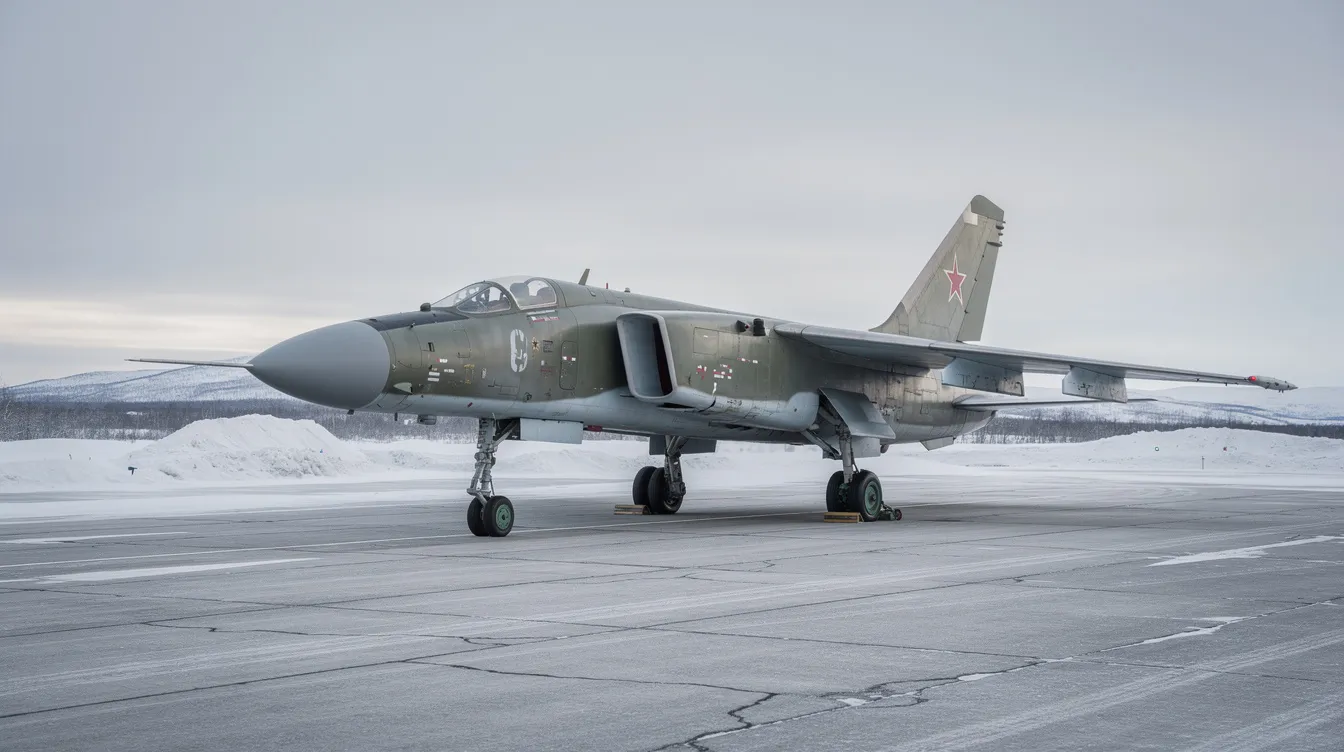
When it comes to sheer size in a fighter aircraft, nothing that ever entered operational service rivals the Soviet-built Tupolev Tu-128. At nearly 99 feet long and weighing more than 96,000 pounds fully loaded, this Cold War interceptor remains in a class of its own.
This article explores what makes the Tupolev Tu-128 the largest fighter jet ever built, compares it to other large fighters, and explains why size matters in military aviation. It is intended for aviation enthusiasts and anyone interested in military technology or aircraft design. The topic is significant not only for its historical context but also as an engineering achievement, illustrating how military requirements drive innovation and shape the evolution of aircraft design.
Largest Fighter at a Glance: Fast Answer for Readers
The Tupolev Tu-128-originally known as the Tupolev Tu-28 before its official designation changed around 1963-holds the title of the largest fighter jet ever to enter service and the longest fighter jet by fuselage length. The term "largest" can refer to length, maximum takeoff weight, or wingspan (Fact: Size can be measured by length, maximum takeoff weight, or wingspan). Built during the Cold War to defend the Soviet Union against long-range strategic bombers approaching over the Arctic, the Tu-128 was never designed for dogfighting. It was a pure interceptor: big, fast, and armed with heavy air-to-air missiles.
Quick-reference summary:
Role: Long-range interceptor
Country: Soviet Union
Length: 30.06 m / 98.7 feet
Wingspan: 17.53 m / 57 ft 6 in
Maximum takeoff weight: 43,700 kg / 96,342 pounds
First flight: March 1961
Years in service: 1965–1990
For fighter jet size comparison, the only aircraft that surpasses the Tu-128 in raw dimensions is the Lockheed YF-12 prototype, which reached about 31 meters in length and 63,500 kg MTOW-but it never entered service. The Tu-128 remains the undisputed largest fighter to fly operational missions.
Why Size Matters in Fighter Jet Design
The terms largest fighter, biggest fighter, and longest fighter jet can refer to different metrics. Size can be measured by length, maximum takeoff weight, or wingspan-and each tells a different story about what an aircraft was designed to do.
Consider three contrasting aircraft:
Tu-128: 98.7 feet long, ~96,342 lb MTOW-optimized for endurance and payload over remote territory
MiG-25 Foxbat: shorter at ~78 feet, lighter at ~81,000 lb, but the MiG-25 can reach speeds of Mach 2.8-built for raw speed and altitude
F-15E Strike Eagle: ~63.8 feet, ~81,000 lb MTOW-balanced for agility and multirole ground and air missions
What larger size typically enables:
More internal fuel for extended range and patrol time
A bigger nose section housing a large ventral radar with greater detection range
Heavier weapons loads, including oversized missiles
An additional cockpit seat for a dedicated weapons systems operator on long missions
The trade-offs are real: higher drag, a larger radar cross section reducing stealth, and significantly less agility in close-in air combat. Combat range can vary significantly among different fighter types and roles, making direct comparisons nuanced. The Grumman F-14 Tomcat, for instance, features variable geometry wings to balance sweep for speed with spread for low-speed handling-a design compromise that avoided building an even larger airframe.
Origins of the Largest Fighter: Tu‑28 to Tu‑128
By the mid-1950s, the Soviet air force faced a daunting problem. American B-52 bombers could approach across polar routes over thousands of miles of Arctic wilderness where ground radar coverage was sparse. The entire territory of the USSR's northern frontier needed protection, and existing fighters lacked the range or endurance to patrol it.
The Tupolev Design Bureau, led by designer Iosif Nezval, began development around 1958. The aircraft drew heavily on data from various projects, including the earlier Tu-98 bomber prototype, which provided critical insights into stability at supersonic speeds.
Key milestones in development:
Initially designated Tupolev Tu-28; redesignated Tu-128 around 1963 as it approached series production
Conceived specifically as a long-range interceptor for PVO Strany (Soviet Air Defense Forces), not a front-line dogfighter
Broad swept wings optimized for high-altitude cruise rather than turning performance
Twin Lyulka AL-7F-2 turbojet engines derived from bomber powerplants
Two-seat tandem cockpit with a dedicated navigator/weapons officer
A large radar housed in a prominent nose radome
Design and Engineering: What Made the Tu-128 So Big
The Tu-128's imposing presence on any flight line was no accident. Every dimension of the airframe was driven by range and payload requirements, not maneuverability.
Fuselage: The Tupolev Tu-128 is 98.7 feet long, accommodating massive fuel tanks, an oversized Smerch radar with detection ranges of approximately 50 km against bomber-sized targets, and extensive avionics bays
Wings: 57 ft 6 in wingspan with modest sweep, optimized for efficient high-subsonic and low-supersonic cruise at altitude rather than tight turning
Engines: Two Lyulka AL-7F-2 turbojets, each producing roughly 10,100 kgf with afterburner-enough thrust to push the aircraft to speeds around Mach 1.6–1.7
Armament: Four Bisnovat R-4 (AA-5 "Ash") long-range missiles on external pylons-two radar-guided (R-4R) and two infrared (R-4T). No internal weapons bay and no built-in cannon; the aircraft relied entirely on advanced weaponry launched from standoff distance
Crew: Pilot and weapons systems operator in tandem seating, essential for managing radar and missiles over patrols lasting several hours across Siberian airspace
For perspective, the F-4 Phantom II-one of the largest Western fighters of the same era-measured only about 63 feet in length with an MTOW around 61,000 lb. The Tu-128 dwarfed it in every dimension. Western experts who first observed the aircraft at the 1961 Tushino air show were struck by its sheer size.
Operational History: From Entry into Service to Retirement
The Tu-128 flew its first flight in March 1961 and entered limited frontline deployment by 1964, with official acceptance into the Soviet air force around 1965. Production ran from 1962 to approximately 1970.
A total of 198 Tu-128 aircraft were built, including roughly 10 trainer variants with an additional cockpit for instruction.
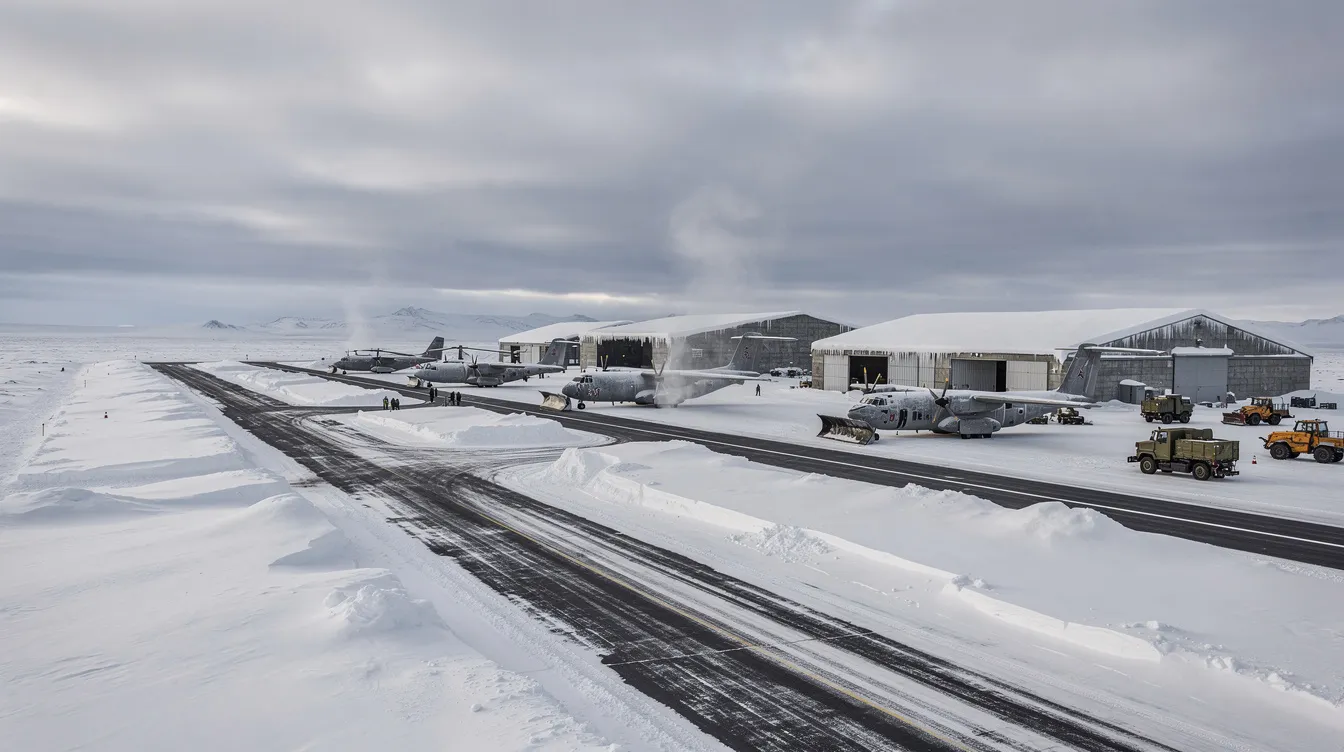
Units armed with the Tu-128 were based primarily in remote northern and eastern regions-Arctic stations like Talagi and Amderm-, covering barrier patrol lines where few ground radar stations existed.
The aircraft remained central to Soviet air defense for over two decades, relying on its onboard radar combined with ground control intercept support to cover vast expanses.s
The only publicly reported combat operation involved interception and destruction of NATO reconnaissance balloons ("automatic drifting aerostats"); no bomber shoot-downs were recorded.
It served in the Soviet air force until 1990, when units transitioned to the Mikoyan MiG-31 Foxhound
Its operational doctrine-long straight-line interception at high altitude using heavy missiles-directly shaped later Soviet interceptor design philosophy
Specifications and Performance: The Numbers Behind the Size
Below is a consolidated look at the Tu-128's key specifications and what they mean in practice.
Dimensions and weights:
Metric | Value |
|---|
Length | 30.06 m / 98.7 feet |
Wingspan | 17.53 m / 57 ft 6 in |
Maximum takeoff weight | 43,700 kg / 96,342 pounds |
Empty weight | ~24,500 kg |
Performance: | |
Maximum speed: ~1,900 km/h (Mach 1.65–1.70) at altitude
Service ceiling: ~15,600 m (51,000 ft)
Ferry/barrier range: approximately 3,200 km; barrier patrol profiles allowed orbiting above 11,000 m for roughly three hours under dry thrust
Systems and armament:
Radar: RP-S Smerch (later Smerch-M), detecting bomber-sized targets at ~50 km and locking on at ~35–45 km
Standard loadout: four R-4 missiles (two R-4R radar-guided, two R-4T infrared)
Defensive systems were minimal-no significant electronic countermeasures; the aircraft was expected to operate outside enemy air superiority zones.
For comparison, the Su-35 Flanker E carries modern AESA radar, thrust-vectoring engines, and a digital glass cockpit-demonstrating how technology, not just size, advances combat capability.
How the Tu-128 Compares to Other Giant Fighters
The Tu-128 sits at the top of a surprisingly crowded field of oversized fighters and interceptors, most of them products of Cold War-era thinking.
Lockheed YF-12: Longer (~31 m) and far heavier (~63,500 kg MTOW) with Mach 3+ speed, but it carried belly-mounted testing instruments during trials and never entered full production. The Tu-128 retains the title of largest fighter to enter service.
MiG-25 Foxbat: Shorter and lighter but extraordinarily fast-the MiG-25 can reach speeds of Mach 2.8. A different philosophy: raw speed and altitude vs. endurance.
Sukhoi Su-34 Fullback: The Su-34 is 76 feet 7 inches long and has a maximum takeoff weight of 99,500 pounds. While shorter than the Tu-128, it is a heavier, modern strike platform. The Su-34 features a distinct side-by-side cockpit layout-unique among tactical jets.
Su-30 Flanker C and Su-35 Flanker E: Lengths around 72 feet; the Su-35 has a wingspan of 50.2 feet. Lighter and far more agile than the Tu-128, with superior avionics and multirole capability.
Chengdu J-20 Mighty Dragon: At roughly 67 feet in length, the J-20 has an estimated maximum takeoff weight of 81,600 pounds. Stealth design philosophy keeps it more compact than Cold War interceptors while still carrying weapons internally.
F-111 Aardvark: Often classified as a strike aircraft, the F-111 has a maximum takeoff weight of 100,000 pounds-a reminder that the heaviest fighter classification depends on role definitions. Like the F-14, the F-111 used variable geometry wings.
The Biggest Fighter Jets in Service Today (Post‑Tu‑128 Era)
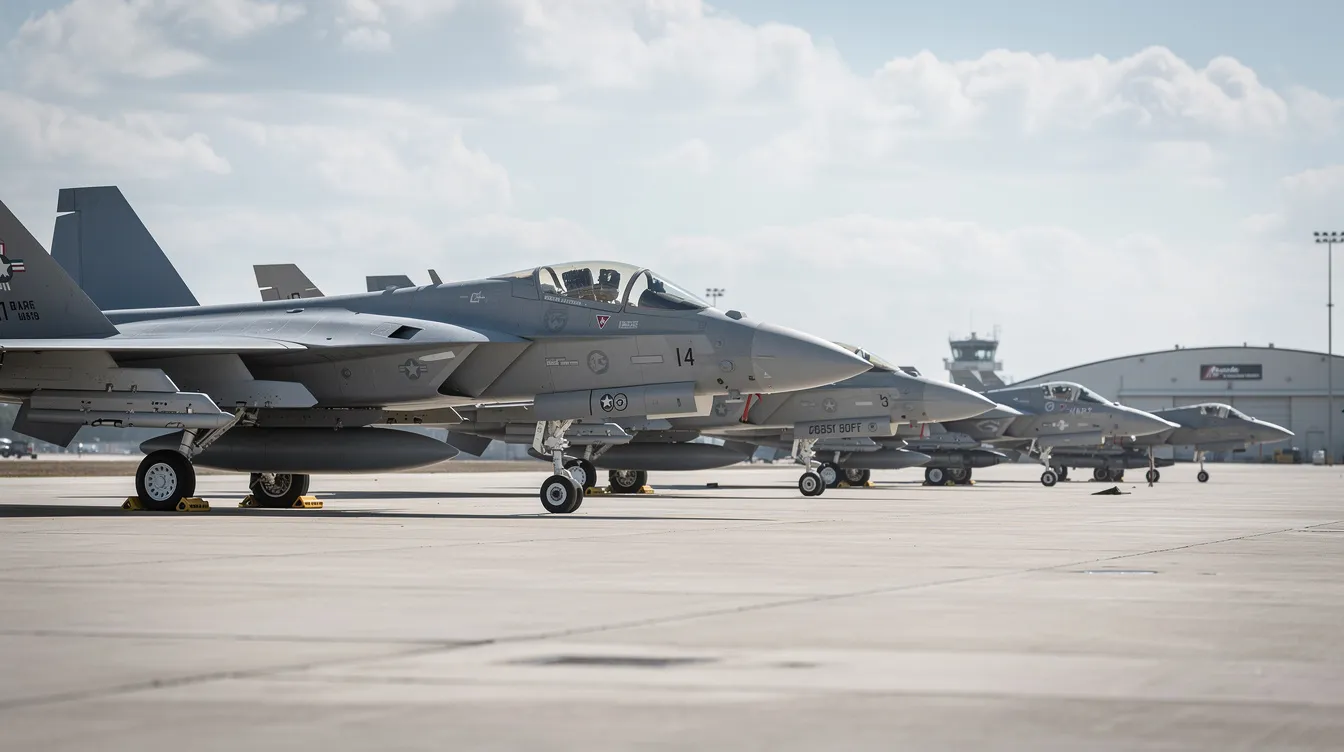
While the Tu-128 and several other giants have retired, modern air forces still operate very large fighters.
Sukhoi Su-34 Fullback: The Sukhoi Su-34 is the longest tactical strike fighter actively flying today at 76 feet 7 inches. It entered service with the Russian air force and carries laser-guided bombs alongside air-to-air missiles for multirole flexibility.
Mikoyan MiG-31 Foxhound: The Mikoyan MiG-31 is the heaviest operational fighter jet currently in service. The MiG-31 has a maximum takeoff weight of 102,000 pounds and patrols Arctic and Siberian sectors much as the Tu-128 once did.
Su-30 Flanker C / Su-35 Flanker E: Substantial in size, long range, and heavy internal fuel loads; widely exported to countries including those in Australia's region and beyond.
F-15E Strike Eagle / F-15EX Eagle II: The largest fighters in U.S. Air Force service by length (~63 ft 8 in), carrying among the heaviest weapons loads of any Western planes.
F-22 Raptor and J-20 Mighty Dragon: The heaviest U.S. fighter is the Lockheed Martin F-22 Raptor with a max takeoff weight of around 83,500 lb. Both the Raptor and the J-20 reflect modern priorities-stealth, sensor fusion, and networking-which keep airframes more compact than classic heavy interceptors.
Why the Biggest Fighters Are Mostly Soviet and Russian Designs
Seven of the world's largest fighters in history were designed by the Soviet Union or Russia. This is no coincidence-it flows directly from geography and doctrine.
Vast territory spanning 11 time zones required aircraft with extreme range to patrol remote Arctic and Siberian sectors where few bases existed, and support infrastructure was minimal.
Soviet doctrine relied less on tanker fleets and large airborne early warning coverage than Western air forces, pushing more fuel, bigger radars, and heavier missiles into the fighter itself.f
NATO and US forces could base fighters closer to likely engagement zones and support them with tankers, AWACS, and carriers-allowing smaller, more agile designs like the F-16 or Rafale
Western fighters emphasize agility, multi-mission flexibility, and stealth over extreme range without refueling.ng
Even the largest fighters remain small compared to strategic bombers and transports. A Tu-160 bomber, for instance, weighs roughly five times what the Tu-128 did at takeoff.
From Cold War Interceptors to Modern Private Jets: What Size Means for Today's Traveler
Although the Tu-128 and its contemporaries were built for war, the underlying logic of aircraft size, range, payload, and endurance applies directly to modern business and private aviation.
Larger airframes carry more fuel and passengers, enabling nonstop sectors (e.g., New York to London or Los Angeles to Tokyo) that smaller jets cannot cover. This mirrors the Tu-128's design rationale: go farther without stopping.
Cabin volume in large-cabin business jets translates into stand-up headroom, lie-flat seating, and dedicated work zones-a strategic advantage in productivity and rest compared to commercial first class, and understanding private jet sizes and categories helps match cabins to specific mission profiles.
BlackJet's Jet Card programs give clients access to multiple aircraft categories-from light jets for regional hops to long-range private jets optimized for intercontinental flight-without the complexity of ownership, and a clear grasp of overall Jet Card cost and structure helps travelers budget confidently.
Unlike Cold War fighters, modern private jets under BlackJet's network prioritize safety, comfort, and efficiency, with rigorous safety certification and carbon-neutral flights built in.
Consider this scenario: a client flying on a large-cabin jet from Los Angeles to Tokyo using a 50-hour Jet Card, drawing on insights from a comprehensive 50-hour Jet Card cost guide, working in a quiet cabin with secure connectivity, and arriving rested enough to step directly into meetings. The right aircraft size, matched to the mission, makes all the difference.
BlackJet uses digital booking tools and real-time support to match travelers with the right aircraft for each trip, and offsets emissions to keep every flight carbon neutral, while resources outlining the main types of private jets for every traveler clarify which category best fits each mission.
FAQ: Largest Fighter Jet and Aircraft Size Questions
What is the largest fighter jet ever to enter service?
The Tupolev Tu-128 "Fiddler." The Tupolev Tu-128 is 98.7 feet long with a maximum takeoff weight of 96,342 pounds. It served from 1965 to 1990. Stay current with the latest aviation news, and you'll find no operational fighter has surpassed it.
What is the biggest fighter jet ever built, even if it never entered service?
The Lockheed YF-12A prototype, at approximately 101.7 feet long and 140,000 lb MTOW. Only three were built, and the designation never progressed beyond testing.
Which fighter jet is the largest in service today?
The MiG-31 is the heaviest fighter jet at 102,000 pounds MTOW. The Su-34 is the longest at 76 feet 7 inches. The answer depends on which metric you prioritize.
How does the Chengdu J-20 compare in size to older heavy fighters?
The J-20 Mighty Dragon is roughly 67 feet long with an estimated MTOW of 81,600 lb. Its stealth priorities and internal weapons bay keep it more compact than Cold War interceptors, though it remains one of the world's larger modern fighters.
What is the largest fighter currently used by the US Air Force?
By length, the F-15E/F-15EX at ~63.8 feet. By takeoff weight, the heaviest U.S. fighter is the Lockheed Martin F-22 Raptor with a max takeoff weight of around 83,500 lb.
Does a bigger jet always mean a better flight experience?
Not necessarily. Larger jets offer more cabin volume, smoother rides, and longer range, but they may require larger airports and carry higher operating costs. Matching jet size to mission profile matters more than raw dimensions.
How does BlackJet help me choose the right size jet for my trip?
BlackJet matches flight distance, passenger count, and comfort requirements to the appropriate aircraft class through its Jet Card programs and on-demand support. Understanding Jet Card cost per hour also helps align budget with expected usage. Smaller cabins work for quick regional hops; large-cabin aircraft handle intercontinental nonstop missions with ease.
Conclusion: The Legacy and Impact of the Tupolev Tu-128
The Tupolev Tu-128 stands as a monumental achievement in military aviation history, embodying the strategic imperatives of its era with unmatched size and endurance. As the largest fighter jet ever to enter operational service, it highlights how design priorities shift with mission demands—trading agility for range, radar power, and missile payload to defend vast, remote airspace.
Its development by the Tupolev Design Bureau marked a pinnacle of Cold War aerospace engineering, addressing unique geographic and tactical challenges faced by the Soviet Union. While no longer in service, the Tu-128's legacy endures through its influence on subsequent interceptor designs and its role in shaping modern concepts of long-range air defense.
For today’s discerning traveler and aviation enthusiast, the story of the Tu-128 offers insight into how size and capability intersect in aircraft design—parallels that resonate in the world of private and business jets. Just as the Tu-128 optimized for range and payload, modern private aviation balances cabin size, range, and efficiency to deliver seamless, premium travel experiences.
Explore how BlackJet’s Jet Card programs provide access to a range of aircraft sizes and capabilities, tailored to your mission, with safety, sustainability, and technology at the forefront. The Tu-128 reminds us that in aviation, size is not just about scale but strategic advantage—whether in defense or luxury travel.
Elevate your journey with BlackJet, where every flight is a testament to precision, performance, and possibility. Discover more about large-cabin jets and how to choose the right aircraft for your travel needs with our Jet Card cost guide.


 Sign up with google
 Sign up with Apple