
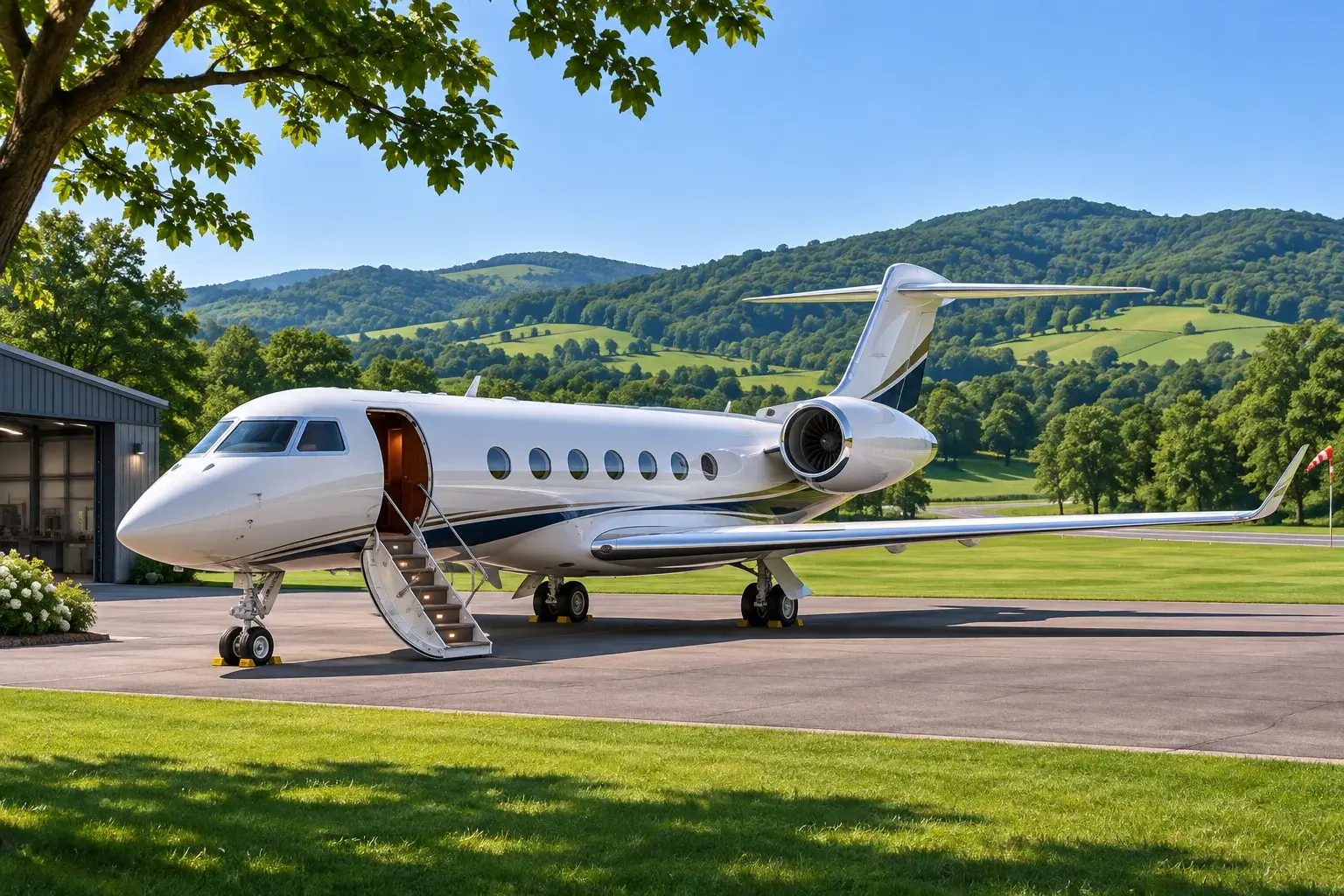
Chartering a private jet typically costs between $2,000 and $23,000 per flight hour in 2027, depending on the aircraft category. This article breaks down every cost layer, from base hourly rates and federal excise tax to crew expenses and fuel surcharges, so you can answer "jet how much" with real numbers before requesting a quote.
Jet How Much: Quick Answer for 2027
"Jet how much" almost always means: what does it actually cost to fly on a private jet, not to buy one? In 2027, the answer depends on aircraft size, route length, and how many fees get layered on top of the base hourly rate. Private aviation charges for the entire aircraft rather than per seat, so splitting the cost among passengers is part of the math.
Here are typical 2027 private jet hourly rates by aircraft category (base rates before taxes and add-ons):
Turboprops (Pilatus PC-12, King Air 350): $2,000 to $3,000 per hour
Very light jets (Citation Mustang, Phenom 100): $2,800 to $3,800 per hour
Light jets (Phenom 300E, Learjet 75): $3,500 to $5,000 per hour
Midsize jets (Citation Latitude, Hawker 900XP): $4,300 to $6,500 per hour
Super midsize jet (Challenger 350, Praetor 600): $6,000 to $9,000 per hour
Heavy jet (Challenger 650, Falcon 900LX): $8,000 to $14,000 per hour
Ultra long range jets (Gulfstream G650ER, Global 7500): $12,000 to $20,000+ per hour
Three concrete 2027 trip examples:
New York to Miami, light jet, one-way: $15,000 to $22,000 all-in
Los Angeles to Las Vegas, light jet, one-way: $7,000 to $10,000 all-in
New York to London, ultra long range jet, one-way: $130,000 to $180,000 all-in
Total costs can exceed base rates by 20 to 40% once you factor in federal excise tax, airport fees, positioning, and crew logistics. Guides on how much to rent a private jet can help frame these variables, but BlackJet Jet Cards turn "jet how much" into a predictable number by locking in fixed hourly rates across multiple aircraft categories.
Why "Jet How Much" Is a Strategy Question, Not Just a Price Tag
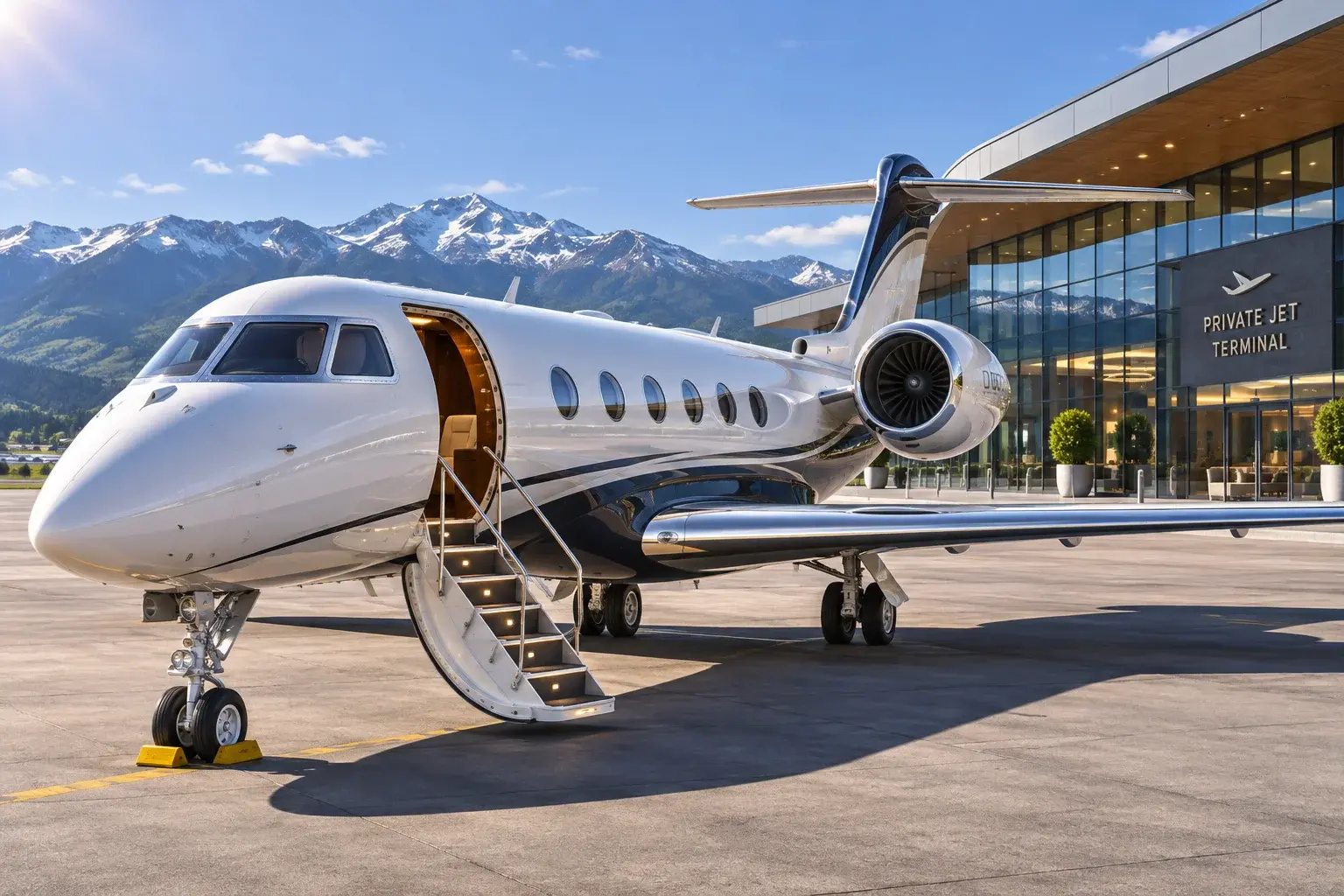
Private jet travel in 2027 is a scheduling tool. Commercial airlines serve roughly 500 airports in the United States; private aircraft access over 5,000. That difference turns multi-city itineraries that would take three days on commercial airlines into a single day on a private plane.
Consider a New York to Chicago day trip. Flying commercial first class from JFK requires arriving 90 minutes early, clearing security, boarding, a 2.5-hour flight, deplaning, and ground transportation to your meeting. Door-to-door: 9 to 12 hours for a round trip. A private flight from Teterboro to Chicago Midway cuts that to 5 to 6 hours, including both legs.
When a deal, board meeting, or project review is worth six figures, compressing a $20,000 to $40,000 private jet flight into a half-day can be a rational investment. BlackJet's Jet Card clients typically fly 25 to 200 hours per year, using private jet travel as a tool for business leverage and high-value leisure.
The sections below unpack how much different private jets cost, what drives those costs, and how BlackJet's model delivers transparent private jet pricing.
Private Jet Cost in 2027: Core Price Ranges
Jet fuel wholesale prices on the U.S. Gulf Coast rose from roughly $2.15 per gallon in early 2025 to $4.48 per gallon by October 2026. That pressure, combined with strong post-pandemic demand and limited aircraft availability, is pushing 2027 private jet costs modestly above 2025 to 2026 benchmarks.
Private jet hourly rates range from $2,000 to $20,000+ depending on aircraft category. Costs vary based on aircraft size and range, with larger cabins and longer distances raising hourly rates, fitting into broader private jet price list ranges for charter and ownership. Here are 2027 base per-hour ranges:
Aircraft Category | 2027 Base Rate (Per Hour) |
|---|---|
Turboprop | $2,000 to $3,800 |
Very Light Jet | $2,800 to $4,600 |
Light Jet | $3,500 to $5,500 |
Midsize | $4,800 to $7,200 |
Super Midsize | $6,800 to $9,800 |
Heavy | $8,500 to $14,000 |
Ultra Long Range | $12,000 to $20,000+ |
These are base hourly rates before federal excise tax, segment fees, landing fees, and other variable operating costs. Actual trip prices usually end up 20 to 40% higher once positioning, airport, and crew costs are included. For a deeper breakdown of how charter quotes are constructed, see this overview of private jet charter pricing. Hourly charter rates scale primarily with cabin size, speed, and nonstop range.
BlackJet Jet Cards lock in fixed per-hour rates for defined aircraft categories, shielding clients from many short-term market swings.
Aircraft Category Basics: From Very Light Jets to Ultra Long Range
Aircraft category is the single biggest driver of private jet prices. Different aircraft categories have varying typical passenger capacities and hourly rates. The category you choose determines not just comfort but fuel burn, crew requirements, and range, so understanding types of private jets for every traveler is central to budgeting.
Very light jets: 4 to 5 seats, 1,100 to 1,300 nautical mile range. Example: Cirrus Vision Jet. Best for regional flights under 2 hours.
Light jets: 6 to 8 seats, 1,600 to 2,100 nm. Example: Phenom 300E. The middle ground between economy and capability.
Midsize jets: 7 to 9 seats, 2,600 to 2,900 nm. Example: Citation Latitude. Stand-up cabins begin here.
Super midsize jet: 8 to 10 seats, 3,000 to 4,200 nm. Example: Challenger 3500. Coast-to-coast nonstop in North America.
Heavy jet: 10 to 14 passengers, 3,800 to 5,000 nm. Example: Challenger 650. Full galleys, crew rest areas, and, at the largest end, options that overlap with private jets for 20 passengers and other large-group configurations.
Ultra long-range aircraft: 13 to 19 passengers, 6,500 to 8,000+ nm. Examples: Gulfstream G650ER, Global 7500, Boeing Business Jet. Nonstop transoceanic reach, with the largest variants capable of serving as private jets for 50 passengers in VIP airliner layouts.
Choosing more jet than the mission requires inflates private jet flight costs. A 1.5-hour hop on an ultra-long-range jet can cost four times what the same trip costs on a light jet. BlackJet advisors help members match a specific aircraft to each mission, balancing budget with comfort and range.
Very Light Jets and Light Jets: Entry Point to Private Jet Prices
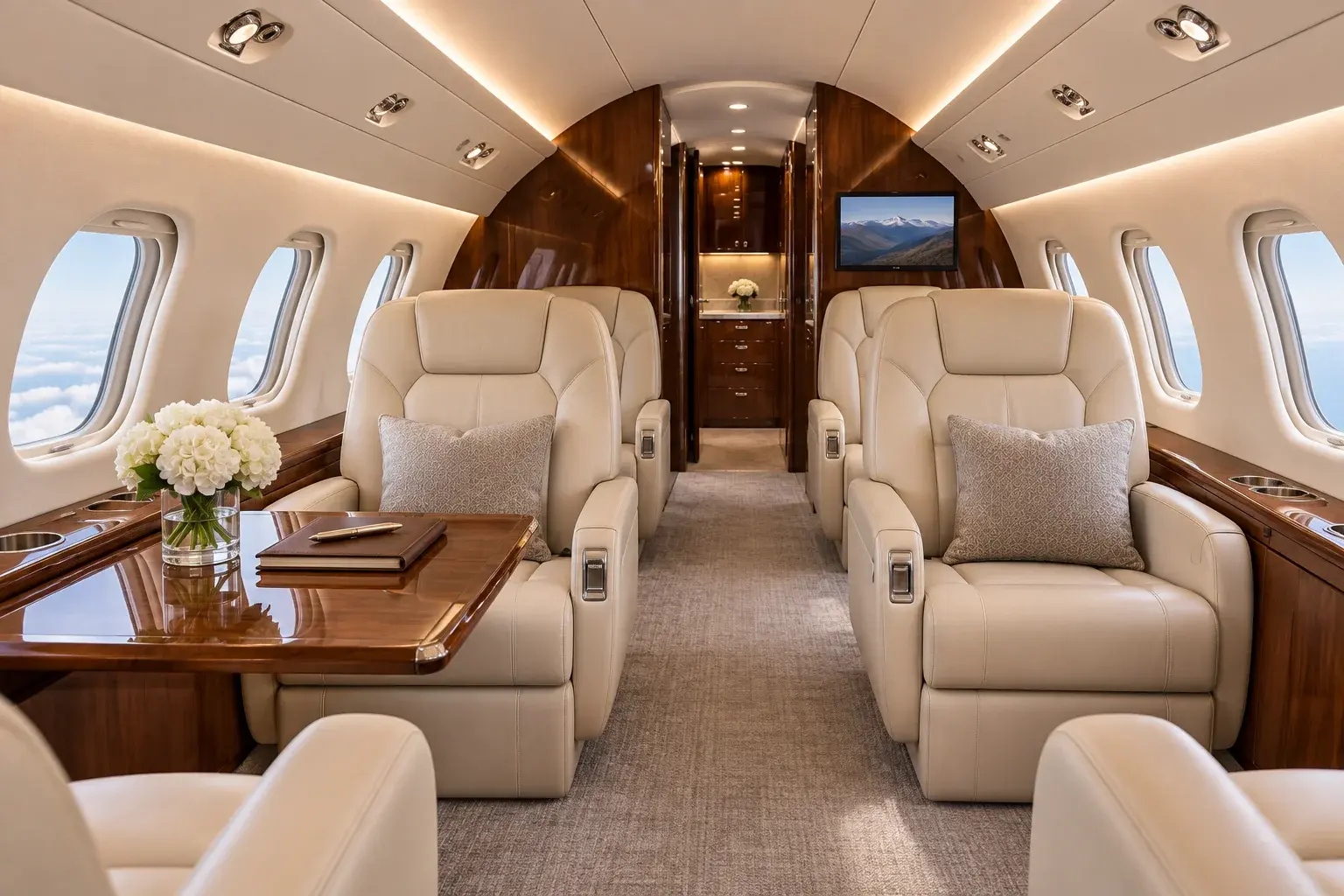
Very light jets and light jets are often where travelers first search "jet how much." Light jets represent the most accessible entry point for private jet rentals on routes under three hours and overlap heavily with budget-friendly private aircraft options for cost-conscious flyers.
Typical 2027 rates reflect the reality that entry-level jets and turboprops often represent the cheapest private jet options for short missions:
Very light jets: $2,800 to $3,800 per hour
Light jets typically cost $3,500 to $5,000 per hour (and light jets typically charge $2,900 to $5,000 per hour at the base level before add-ons)
Sample 2027 routes:
London to Geneva on a very light jet: $7,000 to $11,000 one-way
New York to Nashville on a light jet: $12,000 to $18,000 one-way, plus taxes and fees
Light jet costs benefit from lower fuel burn and smaller crews (often just two pilots, no flight attendant required). Limitations include less baggage capacity, shorter range, and more sensitivity to weather and runway constraints at certain regional airports.
Within BlackJet's smaller-cabin Jet Card tiers, these categories carry predictable per-hour pricing and no ownership risk. Members can access a variety of aircraft types with jet cards, choosing the cabin that fits each trip.
Midsize and Super Midsize Jets: The Cost-to-Range Sweet Spot
Light and midsize jets are the most common "business workhorses" for domestic charter flights in North America and Europe. The super midsize jet occupies the sweet spot for coast-to-coast travel.
2027 hourly rate bands:
Midsize jets range from $4,300 to $6,500 per hour
Super midsize jets cost between $6,000 and $9,000 per hour, depending on age and configuration
Real example scenarios:
New York to Miami on a midsize jet: roughly $22,000 to $32,000 round trip all-in
New York to Los Angeles on a super midsize jet: approximately $50,000 to $70,000 round trip
Stand-up cabins, more baggage capacity, and nonstop ranges of 2,500 to 4,200 nautical miles justify higher private jet prices in these categories. Many BlackJet members choose midsize or super midsize for 25-hour Jet Cards when they frequently fly between hubs like New York, Dallas, and San Francisco, making use of the flexibility highlighted in dedicated 25-hour jet card guides.
Heavy and Ultra Long Range Jets: Pricing for Global Missions
Heavy and ultra long range jets sit at the top of the private jet cost spectrum. These aircraft are designed for intercontinental missions where nonstop capability eliminates fuel stops and crew changes.
2027 hourly rates:
Heavy jets charge $8,000 to $14,000 per hour, aligning with the economics of long-range private jets for sale that are optimized for intercontinental missions
Ultra-long-range jets can exceed $20,000 per hour, particularly flagship models like the Global 7500 and Gulfstream G700
Concrete route examples:
New York to London one-way on an ultra-long-range jet: $130,000 to $180,000 all-in. Long-range flights can exceed $150,000 one-way.
Los Angeles to Tokyo: $160,000 to $230,000 one-way depending on aircraft and season
Larger jets for longer trips generally result in higher overall costs, but the value drivers are real: nonstop capability, full galleys, lie-flat bedding for 10 to 16 passengers, and ultra-long-range reach of 5,950 to 7,800+ nautical miles. BlackJet offers ultra-long-range access within select Jet Card structures, giving members predictable intercontinental private jet pricing for repeat New York to London or New York to Dubai missions.
From "Per Hour" to Total Trip: How Private Jet Flight Prices Are Built
"Jet how much per hour" is the starting point. The total charter cost requires understanding how mission pricing is constructed, especially if you are comparing jet card cost per hour against on-demand charter.
Operators bill based on block time (engine start to shutdown), not cruise time alone. Chartering costs scale with flight time, and many operators enforce daily minimum flight hours of 1.0 to 2.0 hours per leg, even if airborne time is shorter.
Main components beyond the per-hour rate:
Positioning flights (ferry flights incur costs if the aircraft must be repositioned empty for a client)
Airport and navigation fees
Crew expenses (overnights, per diem)
Catering
Federal excise tax (7.5% on domestic charter flights in the U.S.)
Segment fees (~$5 to $6 per passenger per leg)
Concrete example: A 2.5-hour New York to Palm Beach private jet flight on a light jet. Base hourly total: $10,000 to $13,000. Add positioning, landing fees, FET, crew overnight, and catering, and the invoice reaches $13,000 to $18,000. Key factors influencing final pricing include repositioning flights, flight minimums, and crew logistics.
BlackJet simplifies this with Jet Card contracts that clearly define what is included and which items are pass-through at cost, reducing surprises and hidden fees, and aligning with broader jet card cost best practices across the industry.
Taxes, Federal Excise Tax, and Government Charges
Taxes and regulatory charges add a measurable layer to private jet cost, particularly in the U.S. and Europe.
U.S. charges:
Federal excise tax is 7.5% on domestic flights (applied to the base charter cost)
Segment fees of roughly $5 to $6 per passenger per leg
Federal excise tax adds 7.5% to domestic charter flights, applied regardless of aircraft category
International charges:
Overflight permits, landing permissions, and customs handling commonly add $500 to $5,000+ per international private jet flight
In the UK, Air Passenger Duty applies to certain private jet travel on larger cabins and long-haul flights
EU environmental charges are expanding alongside SAF blending mandates
BlackJet's all-in Jet Card pricing in the U.S. is quoted inclusive of applicable federal excise tax where required, so members see a clean, single effective hourly rate rather than a base rate plus a 7.5% surprise.
Operational Costs: Fuel, Crew, Airports, and "Hidden Fees"
Identical routes can produce different private jet prices on different days or with different providers because of variable operational costs.
Fuel Surcharges
Fuel surcharges can add $200 to $800 per flight hour, tracking wholesale jet fuel prices that nearly doubled at certain points from 2025 to 2026.
Minimum fuel purchases at certain FBOs can also affect trip costs.
Crew Expenses
Crew member overnights: $250 to $800 per crew member per night.
Crew per diem and logistics can add to the invoice when an itinerary requires an overnight stay.
Airport Fees and Seasonal Costs
De-icing: $1,500 to $12,000+, depending on aircraft weight and conditions.
Hangar fees for overnight parking vary by airport and aircraft size.
Airport landing fees range from $150 to $3,500, varying based on airport size and aircraft weight.
Booking during peak travel periods (holidays, major events, ski season) can drive up private jet prices further due to limited aircraft availability.
Positioning and Other Hidden Fees
Positioning fees can add $2,000 to $10,000 to costs when the aircraft must deadhead to your departure point.
Common add-on fees include landing charges, overnight crew expenses, and repositioning fees.
Hidden fees that less transparent providers may not highlight upfront include Wi-Fi surcharges, special catering markups, pet cleaning fees, and international handling.
BlackJet prioritizes transparency by disclosing these items in advance and structuring Jet Cards to cap or standardize many such charges.
Private Jet Travel Models: Charter, Jet Card, Fractional, Ownership
Four main access models answer "jet how much per year" in different ways. Private aviation options include private charters, empty-leg flights, and shared private flights alongside membership programs, plus pathways to buy a seat on a private jet when you do not need the entire aircraft.
Model | Commitment | Cost Structure |
|---|---|---|
On-demand charter | None | Variable per-trip pricing, highest volatility |
Jet Card | Prepaid 25-50+ hours | Fixed hourly rates, predictable annual spend |
Fractional ownership | Capital outlay + share | Monthly management + hourly fees |
Full ownership | Aircraft purchase | Fixed annual costs: $500K to $3M+ depending on aircraft type |
Total annual ownership costs include fixed costs, variable hourly rates, financing, and depreciation. For a light or midsize jet flying 200 to 300 hours per year, fixed annual costs can easily exceed $1 to $2 million. Maintenance reserves, insurance, and hangar fees accumulate whether the aircraft flies or not.
On-demand Charter
On-demand charter does not commit and uses variable per-trip pricing, which can mean the highest price volatility.
Jet Card
Jet cards provide fixed hourly rates for private flights. Jet cards eliminate pricing volatility during peak seasons. Jet cards simplify the booking process for frequent travelers. Comparisons of the best jet cards for frequent flyers can help validate whether this structure fits your pattern. BlackJet's Jet Card programs are optimal for 25 to 200 hours annually: predictable private jet rental cost per hour, multi-cabin access, and no exposure to residual value or maintenance risk.
Fractional Ownership
Fractional ownership hourly effective rates often land at $6,000 to $12,000 per hour once the share purchase is amortized. Semi-private flights and empty-leg flights can offer discounts yet require scheduling flexibility from flexible travelers.
Full Ownership
Full ownership requires purchasing an aircraft and taking on its fixed annual costs, variable hourly rates, financing, and depreciation. Fixed costs can accumulate whether the aircraft flies or not.
Sample "Jet How Much" Scenarios: Real Routes, Real Numbers
These 2027 route examples map "jet how much" to common travel patterns. All figures are all-in estimates including base charter cost, taxes, and standard operational costs, and similar logic applies whether you are flying between major hubs or arranging private jet charters in Karachi.
New York (TEB) to Miami (OPF), light jet, one-way: $15,000 to $22,000. Two-day round trip with crew overnight: $32,000 to $48,000. Flight time: approximately 2.5 hours per leg.
Los Angeles (VNY) to Las Vegas (LAS), light jet, one-way: $7,000 to $10,000. Flight time is roughly 1 hour, but minimum flight time policies (typically 1.5 to 2.0 hours) mean the base cost reflects the minimum rather than actual airborne time.
London (LTN) to Nice (NCE), light jet, peak summer: $12,000 to $18,000 one-way. Summer European airspace congestion and elevated demand at Côte d'Azur airports push rates to the upper end.
New York (TEB) to London (LHR), ultra-long-range jet, winter: $140,000 to $180,000 one-way. De-icing, longer routing, and crew logistics in winter add $5,000 to $15,000 above summer baselines.
Dubai to Zurich, ultra-long-range jet: $95,000 to $130,000 one-way, roughly 6 hours of flight time plus international permits and handling.
Under a BlackJet Jet Card, many of these trips carry fixed hourly rates with no peak-day surcharge and guaranteed aircraft availability within a set notice window. Use BlackJet's private jet calculator to model your own routes, or explore whether a 100-hour jet card aligns with your projected annual flying.
Safety, Certification, and Technology: What You Pay for Beyond the Cabin
A portion of private jet prices reflects investments in safety, training, and technology. The difference between a $4,000 per hour light jet quote and a $5,500 per hour quote from a vetted operator often comes down to certifications, pilot training hours, and maintenance standards.
Key safety frameworks in private aviation:
FAA Part 135 certification (the minimum legal standard for U.S. charter operations)
ARGUS Platinum and Gold ratings, based on operational history and safety record
Wyvern Wingman certification, requiring enhanced pilot training and aircraft maintenance
IS-BAO (International Standard for Business Aircraft Operations), a global safety management benchmark
Modern avionics in 2027 (glass cockpits, synthetic vision, ADS-B, advanced weather radar) enhance reliability on every private jet flight. BlackJet curates operators through its Certified Safety Program, admitting only vetted, safety-audited carriers with continuous monitoring of certifications and incident history.
BlackJet's technology stack includes 24/7 operations support, digital booking, and real-time flight updates. These capabilities are reflected in the value proposition rather than as separate line items on the invoice.
Sustainable Private Jet Travel: Carbon Neutrality and Cost
Sustainability is now a purchasing factor, not a footnote. Corporate travelers with ESG reporting requirements need documentation that their private flight activity aligns with carbon commitments.
Sustainable aviation fuel can reduce emissions by up to 80% compared to conventional jet fuel. The price premium for SAF over standard jet-A remains steep, roughly 2 to 4 times the cost of conventional jet fuel in 2027. Europe mandates a minimum 2% sustainable aviation fuel blend starting in 2026, with that percentage set to rise. Modern jets, especially newer budget-friendly private aircraft, can achieve 10 to 15% better fuel efficiency than older models, partially offsetting the SAF premium.
Carbon offset programs typically cost $10 to $20 per tonne of CO2, a small fraction of total trip cost. For a New York to London ultra-long-range flight producing roughly 40 to 60 tonnes of CO2, offsets add $400 to $1,200 to the invoice.
BlackJet offers carbon-neutral flights with embedded offset costs. Every Jet Card flight is covered by verified offsets, with documentation available for ESG reporting. BlackJet does not add "green" surcharges after the fact; sustainability is built into the model rather than layered as hidden fees.
How to Compare Quotes and Avoid Hidden Fees
Two quotes for the same New York to Miami route can differ by $8,000 or more. The gap usually comes from what each provider includes or excludes, not from the aircraft itself.
Quote Items to Confirm
Essential elements to confirm in every quote:
Total billable hours (including taxi time and minimums)
Whether aircraft positioning fees are included or billed separately
Treatment of federal excise tax (included or added after)
Landing and handling fees at both origin and destination
Crew overnights (number of nights, per diem rate)
Fuel surcharges (fixed or floating with spot jet fuel prices)
De-icing policy (capped or at-cost)
Hidden Fees to Watch For
Common hidden fees to watch:
Steep peak-day surcharges during major events
Ambiguous "operational fees"
Non-transparent catering markups
Wi-Fi charges
Pet cleaning fees
Compare Quotes Side by Side
Insist on itemized, written breakdowns. Ask specifically about segment fees and any "subject to change" line items. Comparing structures like NetJets jet card cost can provide useful benchmarks. BlackJet's Jet Card structure largely eliminates guesswork by codifying what is included in the fixed hourly rate and how edge cases are handled.
When Does a Jet Card Make More Sense Than Just Paying Per Flight?
Jet card members enjoy guaranteed aircraft availability and rate protection that on-demand charter cannot match. The crossover point typically arrives at 25+ hours per year on predictable routes.
Jet Card | On-demand Charter |
|---|---|
Locked-in hourly rates, unaffected by seasonal charter pricing swings | Variable per-trip pricing can fluctuate with demand and availability |
No surprise repositioning within the service area | Positioning costs may be added depending on the aircraft's location |
Better control of effective per-hour cost across the year | Effective per-hour cost varies from trip to trip |
Simplified budgeting for finance teams | Requires assessing and budgeting for each quote individually |
Use case 1: A founder flying New York to Austin 2 to 3 times per month. At roughly 4 hours round trip per visit, that is 96 to 144 flight hours per year. A 50-hour Jet Card on a midsize jet at a fixed rate eliminates the volatility of quoting each trip individually, saving 10 to 20% annually versus spot charter.
Use case 2: A family doing seasonal New York to Aspen and New York to Palm Beach trips plus one annual Europe vacation. Total hours: 40 to 60. A 25-hour BlackJet Jet Card covers the domestic legs at fixed private plane rates, with international legs quoted transparently through BlackJet's advisory team.
BlackJet can analyze a prospect's last 12 to 24 months of travel, estimate hours, and model total private jet cost under different access models.
FAQs: Common "Jet How Much" Questions Answered
How much is a private jet per hour for light jets vs ultra long range aircraft in 2027?
Light jets typically cost $3,500 to $5,000 per hour at base rates. Ultra long-range jets start around $12,000 and can exceed $20,000 per hour for aircraft like the Gulfstream G700 or Global 7500.
How much does it cost to rent a private jet for a family of four on a 2-hour flight?
On a light jet, expect $10,000 to $16,000 all-in for a 2-hour domestic leg, including positioning and taxes. Passenger count does not change the base price; private aviation charges per aircraft, not per seat.
Is private jet pricing per person or per aircraft?
Per aircraft. A light jet carrying two passengers costs the same as one carrying seven. The private jet rental cost stays constant regardless of how many seats are filled.
How much does federal excise tax add to a typical U.S. private jet flight?
The 7.5% FET on a $15,000 domestic charter adds $1,125. On a $50,000 coast-to-coast round trip, the tax is $3,750.
What are the most common hidden fees in private jet travel?
Repositioning (positioning fees can add $2,000 to $10,000 to total costs), fuel surcharges, crew overnights, de-icing, Wi-Fi, catering upgrades, and pet cleaning fees. Always request an itemized quote.
Is it cheaper to own a private jet if I fly 150 to 250 hours a year?
Rarely for light or midsize jets. Fixed costs alone (insurance, crew salaries, hangar fees, maintenance reserves) run $500,000 to over $3 million annually depending on aircraft type. Aircraft owners flying under 300 hours per year almost always pay more per hour than Jet Card members.
When do Jet Cards offer the best value?
For travelers flying 25 to 200 hours per year on repeatable routes. Jet Cards provide fixed hourly rates for private flights, eliminate peak-season volatility, and remove the capital risk of fractional ownership or full ownership.
Are BlackJet's carbon-neutral flights more expensive than standard charters?
No. BlackJet embeds verified carbon offsets into Jet Card pricing. Members do not see a separate surcharge for sustainability.
Exact prices require a live quote based on date, route, and aircraft availability. Contact a BlackJet advisor for personalized answers to your own "jet how much" scenario.
How to Get a Precise "Jet How Much" Number with BlackJet
While this article gives realistic 2027 ranges, only a tailored quote can answer "jet how much" for a specific mission. Here is how to get one:
Step 1: Share your details. Route, dates, passenger count, baggage needs, preferred aircraft category, and any special requirements (ground transportation, catering, pets).
Step 2: Receive a transparent quote. BlackJet provides an itemized proposal, including federal excise tax, expected operational costs, and any pass-through charges. Jet Card proposals show the fixed hourly rate and what it covers.
Step 3: Compare options. A dedicated BlackJet advisor walks you through light vs. midsize v. ultra-long-range options, helping you match mission to budget. Use this step to compare on-demand charter pricing against Jet Card rates for your pattern.
Step 4: Confirm and fly. 24/7 operational support, real-time updates, and carbon-neutral performance come standard on every private jet flight.
BlackJet's Jet Card programs in 2027 cover multiple cabin classes, offer guaranteed aircraft availability within defined notice windows, and include rigorous safety and sustainability as standard. Understanding private plane rates starts with the right data; acting on it starts with the right partner.
Elevate your travel on your terms. With BlackJet, private flight is accessible through Jet Card programs built on rigorous safety, carbon-neutral performance, and unmatched flexibility. Explore BlackJet Jet Cards and discover how refined, predictable private jet travel becomes your new standard.