Flight attendant compensation is one of the most misunderstood pay structures in any profession. If you have ever wondered how much does flight attendant make an hour, U.S. commercial airline flight attendants in 2026 typically earn about $25 to $37 per flight hour in their first year, while experienced crew at major carriers can make $70 to $100+ per flight hour; the average is around $29.52 an hour, but that number reflects paid flight time rather than total duty hours.
For aspiring or current flight attendants, aviation-curious travelers, and readers comparing airline and private jet cabin crew pay, that distinction matters because earnings, scheduling, and career progression are built around flight hours, seniority, and extras such as per diem and boarding pay, whether they ultimately fly commercial or buy a seat on a private jet. This guide breaks down hourly rates, how pay grows over time, the gap between flight time and duty time, how commercial airline compensation compares with private aviation, and how cabin crew costs fit into private jet pricing models such as BlackJet’s 25+ Hour Jet Card program.
Quick Answer: How Much Do Flight Attendants Earn Per Hour?
In 2026, most flight attendants at U.S. commercial airlines earn roughly $25 to $37 per flight hour during their first year, with experienced crew members at major carriers earning $70 to $100+ per flight hour. The average hourly pay reported across the industry sits around $29.52 according to recent job posting aggregators, though this figure varies widely by carrier and seniority.
It is critical to understand that flight attendant hourly pay is based on flight time only — the window from when the aircraft door closes at departure until it opens at the destination. Time spent at the airport, during boarding, on layovers, or waiting through delays is largely unpaid or compensated through separate mechanisms. This distinction makes a headline hourly rate look different from what a flight attendant actually takes home relative to total duty hours.
The spectrum breaks down roughly as follows: starting pay at regional carriers falls around $20 to $27 per hour, first-year flight attendants at major airlines typically start between $25 and $37 per flight hour, and senior legacy carrier flight attendants can reach $80 to $100+ per flight hour after a decade or more of service. In private aviation, the model differs entirely. At companies like BlackJet, cabin service is staffed through day rates or trip fees rather than the classic commercial credit-hour system - a structure we will explore later.
How Flight Attendant Pay Actually Works: Flight Time vs. Duty Time
<div style="border: 1px solid #0074D9; background: #f0f8ff; padding: 1em; margin-bottom: 1.5em;"> <strong>Definition Box:</strong><br> <strong>Flight Hours:</strong> The time from when the aircraft door closes at departure until it opens at the destination. Flight attendants are typically paid by flight hours, and flight pay starts and ends with the closing and opening of the aircraft door.<br> <strong>Duty Hours:</strong> The total time a flight attendant is on duty, including pre-flight briefings, boarding, taxiing, deplaning, and ground delays. Total duty hours exceed flight hours due to unpaid ground time.<br> <strong>Credit Hours:</strong> The metric airlines use to calculate monthly pay, often based on flight hours but may include certain minimums or guarantees. Flight attendants are typically compensated for credited time rather than every hour at work. </div>
What Are Flight Hours and Duty Hours?
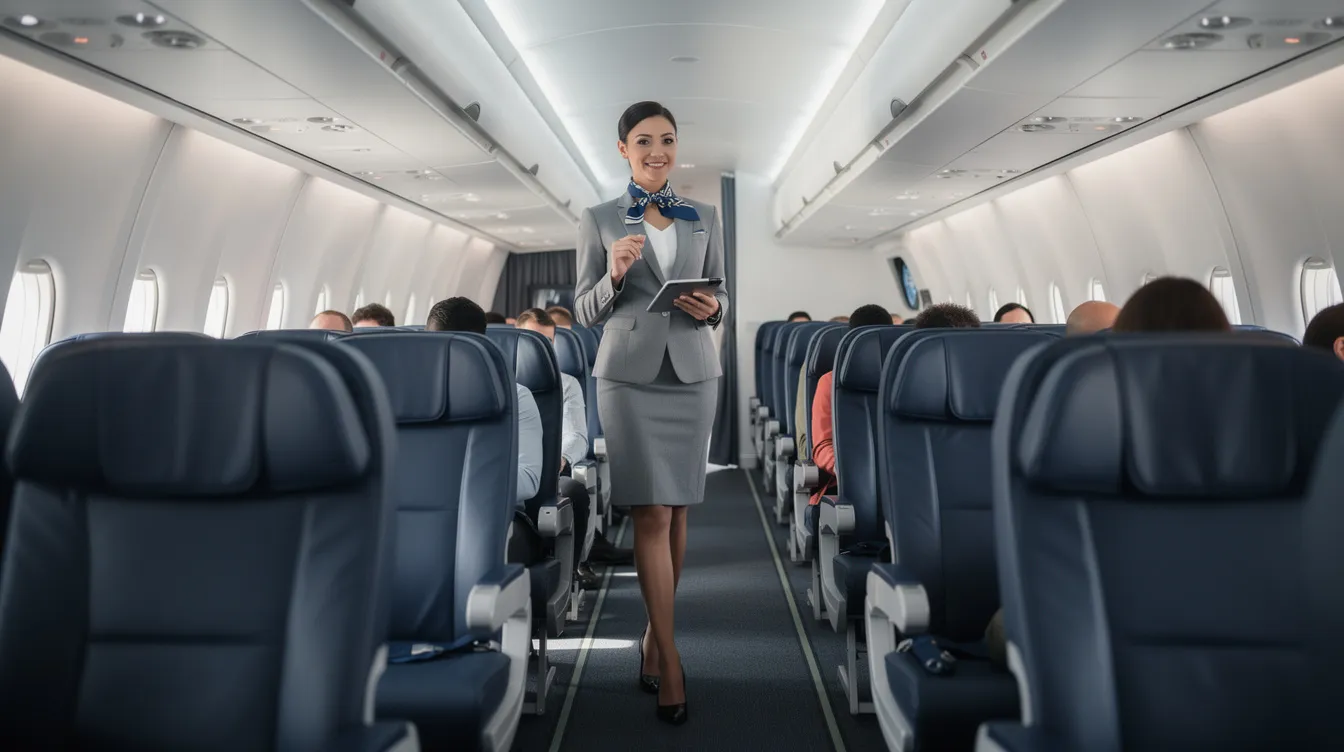
Flight attendants' pay structure is different from conventional 40-hour work weeks. Rather than clocking in and out like most salaried or hourly workers, flight attendants are typically paid by flight hours — also called block hours or credit hours. Flight pay starts when the aircraft door closes and ends when it opens at the destination. Everything outside that window - pre-flight briefings, boarding passengers, taxi time, deplaning, and ground delays - falls into a category airlines treat separately.
This means total duty hours exceed flight hours due to unpaid ground time. A typical duty day can run 10 to 14 hours, yet yield only 5 to 7 paid hours of actual flight time. Consider a flight attendant who reports to the airport at 5:30 AM for a 7:00 AM departure, flies two legs totaling six hours of block time, handles a 90-minute ground turn between segments, and is released at 5:00 PM. That is nearly 12 hours of duty time but only six paid hours.
Credit Hours and Monthly Guarantees
Flight attendants are typically compensated for credited time rather than every hour at work. Airlines use credit hours as the metric for monthly pay, typically guaranteeing 70 to 100 credit hours per month regardless of how many total hours a flight attendant is away from home. Most commercial airlines guarantee a minimum pay line of usually 75 flight hours. This structure applies to U.S. Part 121 commercial airlines, while private jet operators and BlackJet's partner crews may be paid on entirely different models, such as salary or day rate rather than pure credit hours.
Average Hourly Flight Attendant Pay in the United States (2026)
National data from salary aggregators and recent contract disclosures put the average salary for flight attendants in a well-defined range. The typical reported average hourly base is around $28 to $33 per flight hour nationwide — Indeed reports approximately $29.69 per hour from a sample of over 660 postings across the past 36 months. The median annual wage for flight attendants is reported as $67,130 by labor statistics sources.
The distribution is wide. The bottom 10% of earners - typically new hires at regional carriers - fall under roughly $20 per hour. Middle ranges sit in the high $20s to low $40s per hour. The top 10 to 25% of earners, predominantly senior crew at major US carriers and international airlines, land between $60 and $90+ per hour in base flight pay alone. These averages reflect flight pay only and do not include per diem, boarding pay, profit sharing, bonuses, health insurance benefits, or travel perks.
In high-demand markets like New York, Los Angeles, and Miami, and at premium carriers operating international routes, effective hourly earnings - including stipends, per diem pay, and premium cabin assignments - can feel significantly higher than the national average. For a deeper dive into these figures, BlackJet's guide on how much airline attendants get paid provides additional context.
Entry-Level vs. Senior Flight Attendant Pay Progression
Flight attendants' pay increases annually based on seniority, following a pay scale embedded in collective bargaining agreements. Major legacy airlines generally pay higher hourly rates than regional carriers, and the gap widens dramatically over time.
Entry-level flight attendants typically start around $22 to $27 per hour at regional carriers. Endeavor Air, a Delta Connection operator, pays new hires $26.23 per credit hour as of April 2026, with estimated first-year annual cash compensation of around $28,000. At major airlines, entry-level flight attendants earn $25 to $37 per flight hour after recent contract updates—United Airlines starts first-year crew at $37.10 per flight hour under its new contract effective May 30, 2026. Southwest Airlines and other major carriers fall within similar bands for new flight attendants.
The progression milestones look roughly like this: years 3 to 5 often land in the $35 to $50 per hour band, years 6 to 10 move into $50 to $70 per hour, and senior flight attendants can earn $67 to $100+ per flight hour. Top pay rates are reached after 12 years of service at most airlines. United's top rate hits $100.13 per flight hour at 13+ years. The top 10% of flight attendants earn more than $138,040 per year.
A key detail many people overlook: initial training may be unpaid or minimally paid at many airlines, and new hire annual income can be modest—around $26,000 to $32,000 in the first year due to limited credit hours and reserve status. Seniority does not transfer between airlines, meaning a 15-year veteran who switches carriers starts at the bottom of the pay scale again.
Flight Pay, Credit Hours, and Monthly Earnings Examples
Understanding credit hours is the key to translating flight attendant hourly pay into real monthly income. Major airlines guarantee a minimum number of monthly flight hours, and flight attendants typically log 75 to 100 flight hours monthly, depending on their status and airline policies, much like private aviation members assess value through jet card cost-per-hour comparisons.
Many airlines guarantee 70 to 76 credit hours for reserve flight attendants, while lineholders — those who bid for regular schedules—often reach 80 to 95+ credit hours. Here is how that translates to base flight pay in two scenarios:
Scenario | Hourly Rate | Credit Hours | Monthly Base Pay |
|---|
Reserve (new hire) | $30/hr | 75 hours | $2,250 |
Senior lineholder | $55/hr | 90 hours | $4,950 |
The reserve flight attendant in this example adds per diem (roughly $220 to $300 for the month) and possibly some additional pay from certain trips or irregular operations. The senior lineholder stacks per diem, purser or lead premiums of $2 to $5 per hour on specific trips, and potential holiday pay, pushing monthly gross to $5,500 to $6,500 or more.
Flight attendants rarely get paid for every minute they are on the clock from home to home, which is why the gap between paid hours and total duty hours matters so much when evaluating total compensation.
Per Diem, Boarding Pay, and Other Add-Ons
Per Diem
Beyond base pay, flight attendant compensation includes several critical add-ons. Per diem is paid at $2.00 to $3.00 per hour away from base—United pays $2.97 per hour domestic and $3.54 per hour international, while Endeavor Air's diem rates sit at $2.25 per hour. Per diem covers meals and incidentals while away from base and runs from report time until final release, making it a meaningful supplement over a month of trips.
Boarding Pay
Boarding pay is a newer feature negotiated into recent contracts at major carriers. At some airlines, boarding pay is 50% of the hourly flight rate during scheduled boarding time. United's ratified contract introduced boarding pay alongside a 31% overall pay hike, and Alaska Airlines' 2025–2028 agreement includes similar provisions.
Other Compensation
Other forms of additional compensation include:
Holiday pay, typically 150% for six designated holidays
Deadhead pay at 100% pay for repositioning travel when a flight attendant works a segment purely to get into position
Minimum-day guarantees ensuring at least four credit hours of pay per duty day even on short turns
Most airlines provide hotel accommodations and airport-to-hotel transport on overnight layovers, so per diem pay is designed to cover meals rather than lodging
Reserve vs. Lineholder: How Schedule Changes Hourly Flight Attendant Pay
The distinction between reserve status and lineholder status significantly affects how much a flight attendant earns in any given month. Reserve flight attendants are on call — available to be assigned flights as needed during reserve days. They receive guaranteed minimum credit hours (often 70 to 76 monthly) but have less control over which trips they fly and less access to premium international flights.
Lineholders, by contrast, bid for specific monthly lines of flying based on seniority. This typically enables higher total credit hours (80 to 95+), better trip selection, and access to lucrative long-haul or international routes that carry higher per diem and international pay. A lineholder with seniority can strategically pick trips that maximize flight time while minimizing duty time spent waiting at the airport or on short turns.
In private aviation and at companies using jet cards like BlackJet's premium private jet programs, cabin crew schedules function differently. Rather than the strict reserve or lineholder system, crews are often aligned to specific trips or maintained on rotation, with compensation structured as salaries or day rates. For more on how private aviation crew roles compare, see BlackJet's overview of private jet stewardess salary expectations.
Commercial Airline Pay vs. Private Jet Cabin Crew Compensation
Commercial flight attendant compensation is shaped by unionized pay structures—hourly flight pay plus per diem plus boarding pay plus profit sharing, all tightly linked to seniority and contract negotiations. The pay structure is transparent, publicly available in union contracts, and relatively standardized across the company and its peers.
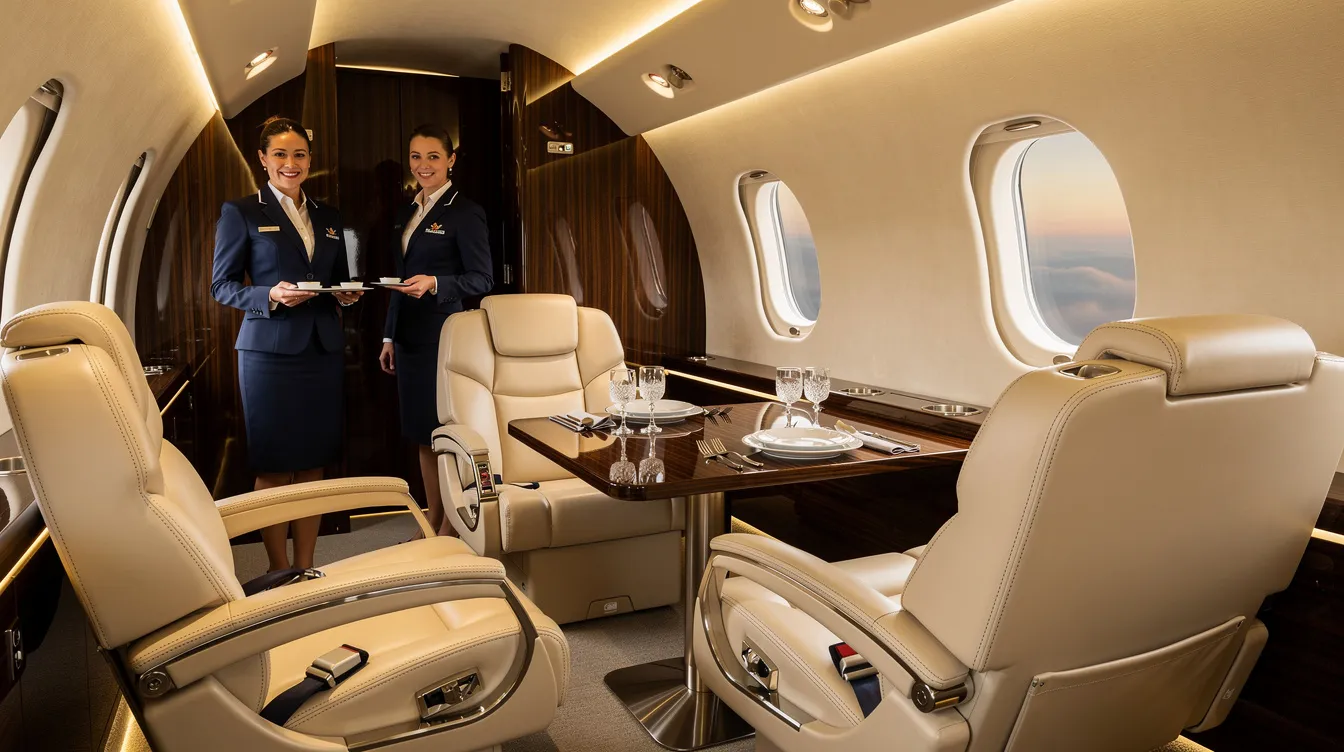
Private jet cabin crew compensation operates on a fundamentally different model. Corporate flight attendants earn an average salary of around $150,000 to $152,000 per year, often through day rates, trip fees, or annual salaries negotiated individually. Schedules can be more irregular, but the service expectations—personalized hospitality for a small number of passengers, advanced safety checks, and flexible availability - command premium pay.
BlackJet's cabin service is delivered by highly trained crews aligned with business aviation standards, similar to the staffing models seen with the best jet cards for frequent flyers. Their compensation reflects specialized hospitality training, rigorous safety certification, and the ability to adapt to the demands of high-net-worth travelers on short notice. While commercial hourly rates are public, private jet cabin crew earnings vary depending on the operator, aircraft type, trip profile, client expectations, and where they sit within the overall private jet price list of aircraft and access models.
Factors That Influence Flight Attendant Pay and Total Compensation
Key Variables Affecting Pay
Hourly pay is only one dimension of what flight attendants earn. Several variables drive annual income, and the differences can be substantial. Key factors include airline type (regional carriers versus legacy versus international), home base location and cost of living, years of seniority, strength of union representation, and the mix of domestic versus international flying.
Premiums and Special Qualifications
Language skills, premium cabin service qualifications, and leadership roles such as lead, in-charge, or purser positions add hourly premiums that vary depending on the carrier and contract. High-demand international routes - New York to London, Los Angeles to Tokyo - carry higher flight attendant pay through increased flight hours, elevated diem rates, and premium cabin responsibilities.
Private Aviation Factors
In private aviation, factors like aircraft category (light jet versus large-cabin), trip length, base location, and client profile influence cabin crew day rates and annual compensation, especially on larger aircraft such as the best private jet for 20 passengers. Understanding private jet operating costs and broader private jet charter pricing helps contextualize how crew compensation fits into the broader economics of a flight.
How Flight Attendant Pay Relates to the Cost of a Private Jet Flight with BlackJet
On a BlackJet flight, crew compensation is one component of the hourly jet card rate—bundled alongside aircraft ownership and maintenance, pilots, insurance, fuel, airport fees, and carbon-neutral operations, all within an overarching jet card cost and membership pricing framework. Unlike commercial aviation, where flight attendant pay is a line item in airline operating budgets visible through union contracts, private jet jet card cost per hour integrates crew costs into a single, transparent hourly rate.
BlackJet's Jet Card pricing is all-inclusive. Cabin crew costs, safety oversight, hotel accommodations for crews, and sustainability offsets are built into the fixed hourly rate—not added as surprise fees, whether you are evaluating a 100-hour jet card cost guide or smaller blocks of flying. Travelers gain predictable, premier access to aircraft and crews without managing individual payroll, per diem, or scheduling complexities themselves. For those exploring how jet cards work or comparing options through a 25-hour jet card guide, this bundled approach is one of the defining advantages over fractional ownership or ad hoc charter.
FAQs: Common Questions About Flight Attendant Hourly Pay
How much do flight attendants get paid per hour on average?
The average hourly wage for flight attendants in the United States is roughly $28 to $33 per hour in base flight pay, with aggregators reporting approximately $29.52 as a central figure. This reflects flight time only and does not include per diem, boarding pay, or bonuses. Verification of these figures comes from cross-referencing multiple salary databases and recent union contracts.
Why isn't boarding time always paid?
Historically, most airlines defined "work" as flight time — parking brake release to parking brake set—and did —ot compensate for boarding or deplaning. Recent contracts with carriers like United and Delta have begun adding boarding pay, but it remains a percentage of the hourly rate rather than full pay, and many airlines still do not offer it.
Do private jet flight attendants earn more?
Corporate flight attendants earn an average salary well above their commercial counterparts, often $150,000 or more annually. However, schedules can be less predictable, and the role demands a higher level of personalized service.
Can flight attendants earn six figures?
Yes. Senior flight attendants at major carriers with optimal bidding, maximum credit hours, and premium route assignments can approach or exceed $100,000 to $140,000 annually when accounting for base pay, per diem, holiday pay, and other premiums.
How many hours do flight attendants work versus how many they get paid for?
A typical month involves 75 to 100 credit hours of paid flight time but 200 to 250 total hours away from home when you include duty time, layovers, and ground waiting.
How does cabin crew compensation fit into the price of a BlackJet Jet Card hour?
BlackJet bundles crew compensation, safety certification, and sustainability into one seamless hourly rate, so members never see separate line items for crew pay, hotel stays, or carbon offsets.
Conclusion: What Flight Attendant Hourly Pay Means for Your Own Travel Choices
While the headline hourly rate for a flight attendant may appear straightforward, it represents only paid flight time — not the full span of duty and time away from home. Many flight attendants spend two to three times more hours on duty at the airport and on layovers than they are compensated through base flight pay. The pay structure rewards longevity, with new hires in the mid-$20s per flight hour and senior crew at major airlines reaching $70 to $100+ per hour with six-figure annual potential.
Understanding flight attendant compensation helps travelers appreciate the safety training, professionalism, and service behind every flight—whether aboard a commercial widebody or a private jet. Every safety check procedure, every meal service, and every smooth check-in process reflect the expertise that these crew members bring to Reflecturney. For a deeper understanding, see our sections on flight attendant pay progression, commercial airline pay vs. private jet cabin crew compensation, and how flight attendant pay relates to the cost of a private jet flight.
For those considering a move from premium commercial cabins to tailored private jet travel with curated cabin service, BlackJet's Jet Card programs offer dedicated, highly trained crews, rigorous safety standards, and carbon-neutral flights—all integrated into a single, predictable hourly access model. Explore BlackJet's Jet Card programs to discover how effortless private travel can reshape your journey.


 Sign up with google
 Sign up with Apple