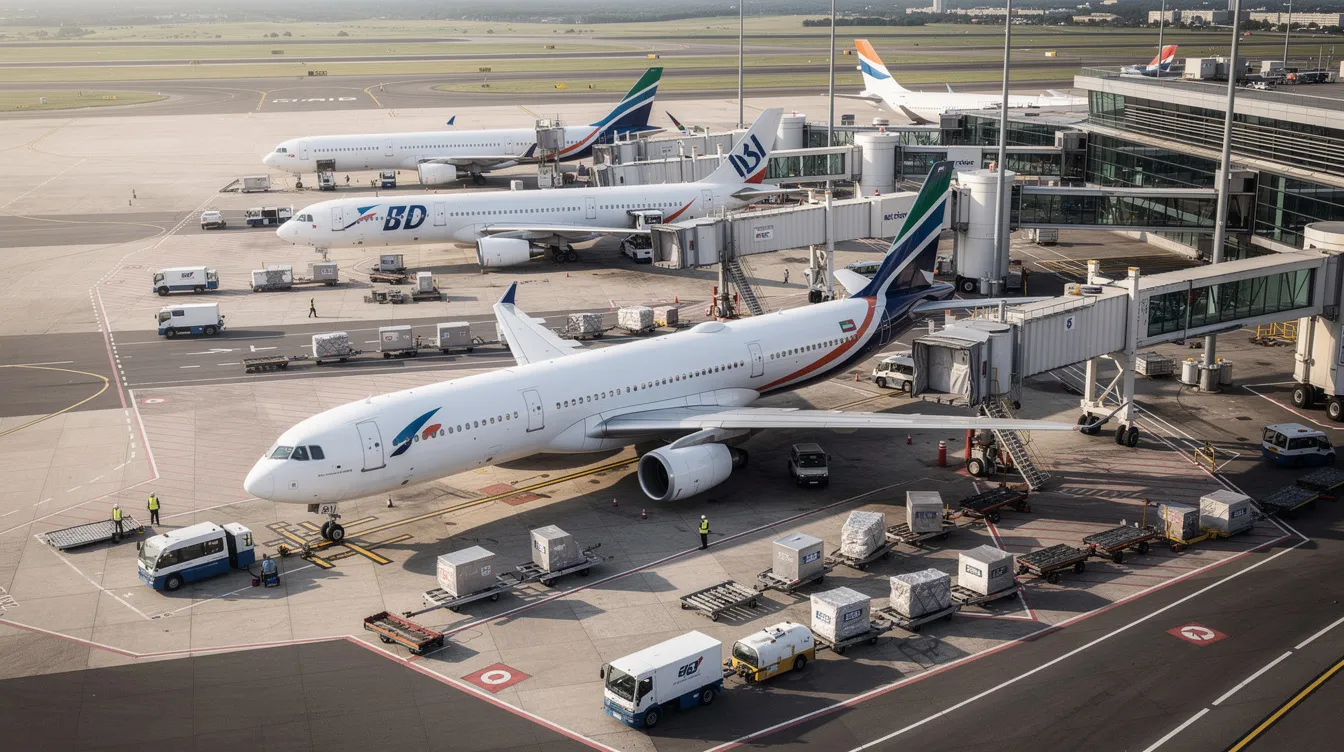
Boeing currently makes about 600 commercial planes a year: after delivering 348 aircraft in 2024, it rebounded to roughly 600 in 2025, with production expected to run at about 600 to 700 annually by 2026 and 2027. That output shapes airline seat supply, route availability, flight frequency, and ticket prices—factors that matter directly to business executives and high-net-worth leisure travelers who value schedule control, privacy, and convenience.
This overview looks at Boeing’s annual production and deliveries, the models that drive those numbers, the safety and regulatory issues that can slow them, and how Boeing’s manufacturing pace influences commercial travel, sustainability efforts, and the gap between airline capacity and private aviation alternatives. For travelers deciding when commercial service is enough and when a solution like BlackJet makes more sense, Boeing’s yearly production is not just an industry statistic—it helps explain why cabins fill up, fares move, and flexible private access keeps gaining appeal.
Quick Answer: How Many Planes Does Boeing Produce Annually?
Boeing delivered 348 commercial aircraft in 2024, its lowest output since 2020. The company rebounded to approximately 600 commercial airplanes in 2025, though that figure still falls well short of its record 806 aircraft delivered in 2018.
Annual deliveries measure the number of aircraft handed over to airlines, not the total number assembled.
The distinction matters: annual deliveries measure the number of aircraft handed over to airlines, not the total number assembled. Boeing may produce planes that sit in inventory awaiting certification or customer acceptance. Deliveries are what generate revenue and put seats into service.
For context, the broader aerospace market is still dominated by a commercial aircraft duopoly between Boeing and Airbus. Airbus consistently delivers more commercial aircraft than Boeing, shipping 793 in 2025. Boeing's monthly delivery rate currently hovers between 40 and 60 jets, depending on the program and regulatory conditions.
Why should a frequent traveler care how many planes Boeing can produce annually? Because every delivery shapes airline capacity, route frequency, and seat competition on the routes you fly most. When deliveries lag, airlines can't grow fast enough to meet demand—flights fill up, fares climb, and schedule flexibility shrinks. That dynamic is precisely why discerning travelers increasingly turn to private aviation solutions like BlackJet's Jet Card programs.
Year | Boeing Deliveries | Airbus Deliveries | Notes |
|---|
2018 | 806 | ~800 | Boeing's all-time peak |
2024 | 348 | 766 | Boeing's lowest since early 2020s |
2025 | ~600 | 793 | Strong rebound, still trailing Airbus |
2026–2027 (Projected) | 600–700 | ~870 target | Gradual ramp, not a snap-back |
Boeing Commercial Airplanes: The Scale of Its Global Fleet
Boeing Commercial Airplanes stands as one of the world's two dominant manufacturers of commercial jetliners, with over 14,000 Boeing airplanes operating around the world. The company serves airline customers on every continent, sells aircraft to airlines in many countries, and powers more than 90 percent of global air freight transport through its dedicated cargo models.
Key Models in Boeing's Lineup
737 MAX family (MAX 7, 8, 9, 10): Narrowbody workhorses for short- and medium-haul routes, the highest-volume program in Boeing's line.
787 Dreamliner: Twin-aisle, fuel-efficient widebody for mid- and long-haul international service.
777 and 777X: Boeing's 777X is the largest capacity twin jet ever built, designed for ultra-long-range, high-density routes. The 777X is expected to enter service in the coming years.
767 Freighter and 777 Freighter: Dedicated cargo aircraft that serve as the backbone of global air transportation networks.
Impact on Airline Operations
The size of Boeing's fleet and its annual output directly influence hub congestion, seat capacity, and route planning for airlines worldwide. Where airlines rely on this scale, private jet programs rely on flexible, smaller fleets to bypass crowded hubs entirely—a fundamental advantage for travelers who value control over their schedules.
Production vs Delivery: How Many Planes Boeing Builds vs Hands Over
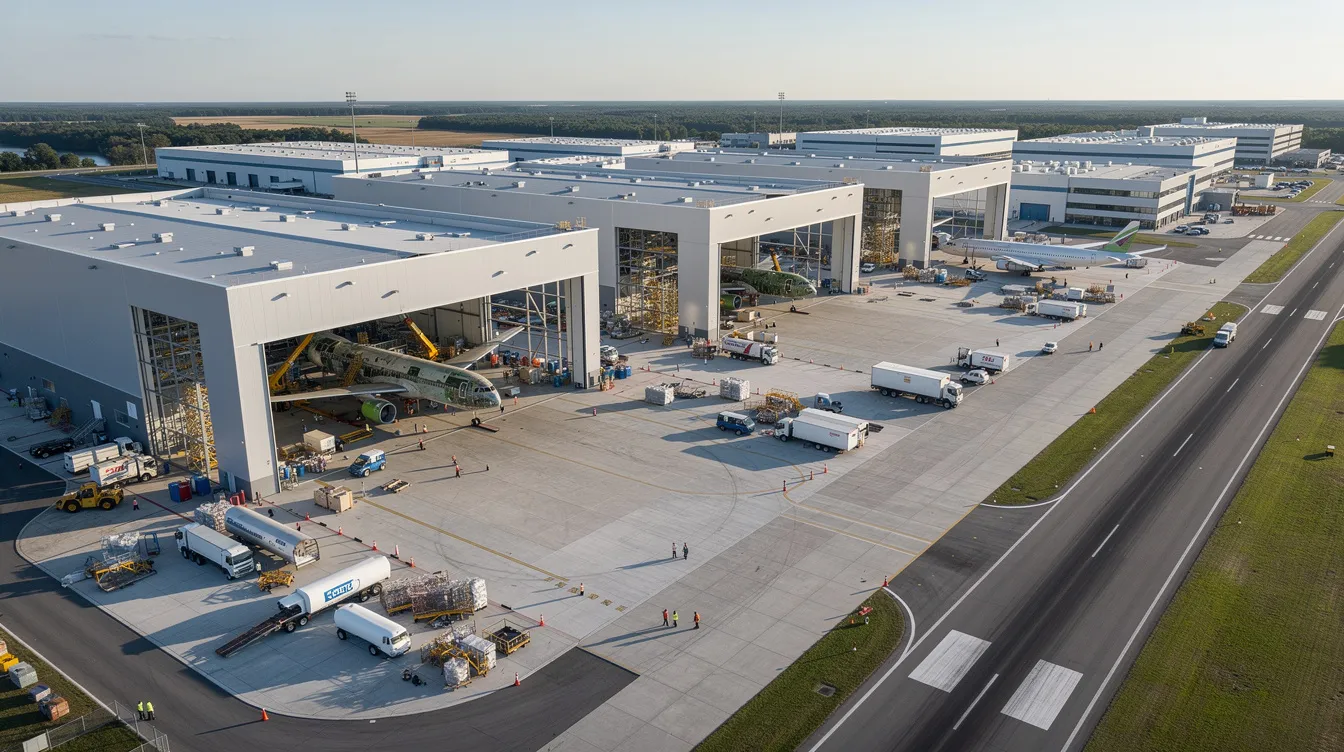
Production rates refer to how many airplanes Boeing can assemble per month at its final assembly facilities in Renton and Everett, Washington, and Charleston, South Carolina. Deliveries, by contrast, represent completed aircraft that have passed certification, been accepted by customers, and triggered payment.
Boeing's production rates are dynamic, influenced by aircraft model and factory capacity. That means how many planes Boeing produces annually can differ significantly from what it actually hands over. Boeing's production planning involves coordination with suppliers and regulators at every stage.
Recent Production Gaps
Here's how the gap has played out recently:
2024: Boeing assembled 737 MAX jets that remained in inventory due to FAA audits and rework requirements following the door plug blowout. Production continued, but deliveries stalled—resulting in 348 delivered versus a higher number built.
2020: Boeing faced significant production slowdowns due to the pandemic, compounding the existing 737 MAX grounding. Deliveries dropped to just 157.
2025: Reworked inventory from prior years finally flowed to airline customers, helping push deliveries to ~600 even as monthly production rates were still ramping.
Implications for Travelers
For travelers, the gap translates directly into slower fleet growth. Airlines can't add frequencies or new routes until planes are actually delivered—not just assembled. When delivery rates lag, commercial seats stay scarce, and premium travelers find more value in time-saving alternatives like private jet charter.
Recent Baseline: Boeing Deliveries in 2024
Boeing delivered 348 commercial aircraft in 2024, making it one of the weakest years in over a decade. Boeing's 2024 deliveries were the lowest since the early 2020s, reflecting a deliberate trade-off of volume for reliability.
Model mix: The majority of 2024 deliveries were 737 MAX narrowbodies (roughly 260 units), with the balance split among 787 Dreamliners, 777s, and 767 freighters on the widebody side.
Door plug incident: On January 5, 2024, the Alaska Airlines Flight 1282 door plug blowout forced an immediate grounding of 737 MAX 9 aircraft with specific door plug configurations. The FAA launched extensive audits of Boeing's production systems.
Production caps: The FAA increased Boeing's 737 MAX production cap from 38 to 42 per month only after Boeing met specific safety performance indicators—a process that consumed much of the year.
Labor strike: In September through October 2024, machinists at Boeing's Seattle-area plants walked out, with 96 percent voting to strike. The production pause across 737, 767, and 777 lines lasted weeks and further drained output.
Supply chain disruptions: Parts shortages and quality issues with suppliers like Spirit AeroSystems capped how many commercial airplanes Boeing could deliver to waiting customers.
Boeing's 2024 delivery count reflects a strategic shift for quality. The company intentionally slowed production to rebuild safety culture, retrain employees, and satisfy regulators before scaling back up. Boeing's commercial aircraft production is impacted by market demand, regulations, and supply chain constraints—all of which converged in 2024.
Rebound Year: Boeing Delivered About 600 Commercial Aircraft in 2025
Boeing aims to deliver 580–600 jets in 2025, and the company achieved roughly 600 deliveries by year's end—a 72 percent increase over 2024's trough. Boeing's recovery period saw an average of approximately 492 aircraft delivered annually from 2023 to 2025, with 2025 marking the strongest single year in that span.
Narrowbody dominance: Boeing delivered 447 of the 737 MAX family in 2025, confirming the program's role as the volume backbone.
Widebody progress: Approximately 88 Dreamliners, 35 triple-sevens, and 30 767s rounded out the total—still below historical widebody peaks.
Orders surge: Boeing logged over 1,100 net orders in 2025, outpacing Airbus's roughly 889, a signal of restored confidence from airline customers worldwide.
FAA confidence: Monthly deliveries ramped as FAA oversight stabilized and reworked inventory cleared, allowing Boeing to increase production at a measured pace.
Despite the rebound, Airbus still led in total deliveries with 793 planes in 2025. Demand from airlines around the world remained intense, with carriers ordering 737 MAX and 787 Dreamliners to meet record passenger loads and replace older, less-efficient aircraft.
Historical Peak vs Present Reality: 2018 to Today
Boeing delivered a record 806 aircraft in 2018, with 737 production alone running above 52 jets per month. By 2020, that had collapsed to 157 deliveries—a decline driven by two intersecting crises:
737 MAX groundings (2019–2020): Following two fatal crashes that resulted in 346 fatalities, the entire 737 MAX fleet was grounded worldwide for nearly two years. No new MAX deliveries occurred during that period.
COVID-19 pandemic (2020–2021): Global air travel demand evaporated, and airlines deferred or canceled orders, further suppressing output.
The recovery has been gradual. Structural changes—workforce layoffs followed by rehiring and retraining, leadership turnover including CEO changes, and a top-to-bottom overhaul of safety culture—continue to shape how many planes the Boeing company can produce annually. Boeing's recovery path targets a gradual rise toward 600–700 aircraft per year by 2026–2027, not an immediate return to 2018 levels.
During the low-production years, airlines extended the life of older fleets, leased used aircraft, and reduced frequencies on secondary routes. Private aviation providers saw a corresponding uptick in demand as business travelers sought reliability outside the constrained commercial system.
The 737 MAX: Backbone of Boeing's Annual Output
The Boeing 737 MAX is the single largest driver of how many planes Boeing can build per year. It accounts for roughly three-quarters of total commercial deliveries in any given period.
Variants: The MAX 8 is the highest-volume model. The MAX 9 serves mid-capacity routes. The MAX 7 and MAX 10 remain in development and face certification delays that limit Boeing's production capacity for the broader family.
Safety history: Boeing's 737 MAX crashes resulted in 346 fatalities across two accidents (Lion Air in October 2018 and Ethiopian Airlines in March 2019), triggering a worldwide grounding of 387 aircraft, while post-crash investigations also scrutinized pilot training requirements for the 737 MAX.
Door plug incident: In January 2024, the Alaska Airlines door plug blowout on a MAX 9 led to renewed FAA scrutiny, audits, and production constraints.
Production caps: Boeing's 737 MAX production cap was raised to 42 jets per month after the manufacturer demonstrated improved quality metrics to the FAA—up from a temporary limit of 38 imposed earlier that year.
Current trajectory: Boeing is working to stabilize MAX production in the low-40s per month, with each regulatory step and quality audit directly influencing monthly production rates and yearly totals.
Certification delays for 737 MAX variants remain a bottleneck. Until the MAX 7 and MAX 10 receive full type certification, Boeing cannot unlock the additional demand airlines have already committed to through orders.
Production Rates by Program: Narrowbody vs Widebody
Boeing's annual output is not one number—it's the sum of several programs running at different speeds across multiple final assembly lines.
Program | Approx. Monthly Rate | Annualized Output | Notes |
|---|
737 MAX | 38–42 | ~456–504 | Narrowbody; highest volume program |
787 Dreamliner | 6–8 | ~72–96 | Widebody; Boeing plans to produce eight Dreamliners per month in 2026 |
777/777X | ~3 | ~35 | Widebody; 777X deliveries still ramping |
767 (incl. Freighter) | ~2–3 | ~25–30 | Primarily military and cargo variants |
The 737 MAX dominates annual volumes as the highest-volume program.
The 787 Dreamliner output has averaged around 6 to 8 aircraft per month, with the company targeting the upper end of that range by mid-2026.
Widebodies contribute smaller but higher-value numbers.
Boeing adjusts these production rates based on airline demand, supply chain readiness, and regulatory approvals.
Airlines and investors watch monthly production rates closely because they translate directly into new aircraft entering fleets each year.
Boeing's long-term production capacity is projected to be higher as manufacturing rates increase across all programs.
For additional context, manufacturers like Embraer and ATR focus on regional aircraft, with Embraer delivering around 100 to 150 jets annually—a fraction of the output from the two dominant commercial jetliners producers.
Orders, Backlog, and Unfilled Demand Around the World
Boeing maintains a backlog of over 6,000 airplanes, extending beyond 2030. At the end of 2024, the company held approximately 5,595 unfilled orders; that figure climbed past 6,100 by the end of 2025 as new sales outpaced deliveries.
Key order milestones: In 2026, China committed to purchasing 200 aircraft. Alaska Airlines ordered 105 Boeing 737 MAX 10 jets. Robust long-haul demand for Dreamliners continued from carriers in the Middle East and Asia-Pacific.
Regional demand: Asia-Pacific leads narrowbody growth. The Middle East drives widebody orders for ultra-long-range routes. North America and Europe focus on fleet replacement and environmental compliance.
Backlog reality: Even with Boeing's production rate reaching 600–700 aircraft by 2026, clearing the full backlog would take nearly a decade at current output levels.
For commercial travelers, this means capacity expansion is pre-sold years in advance. Airlines cannot simply add flights to meet short-term surges. That structural lag is one reason premium travelers look to private jet solutions for near-term flexibility and guaranteed access.
Supply Chain, Spirit AeroSystems, and Labor: What Limits Output
Supplier Challenges
Boeing's global supply chain spans over 20,000 suppliers and partners. No single manufacturer can increase production by flipping a switch—every component, from engines to avionics to fuselage panels, must arrive on schedule and meet specifications.
Labor Disruptions
Labor strike: The September–October 2024 machinists' strike halted production across the 737, 767, and 777/777X lines in Washington state. The eventual settlement included a 38 percent pay raise, but the weeks-long stoppage cost dozens of potential deliveries.
Skills and training: After mass layoffs during the pandemic, Boeing has been rehiring and retraining thousands of employees—quality inspectors, technicians, and assembly workers whose expertise cannot be replaced overnight.
Quality Control Measures
As of mid-2026, the FAA has allowed Boeing to resume issuing airworthiness certificates for new 737 MAX and 787 aircraft, a milestone that eases one major bottleneck. But the combination of supply chain disruptions, labor dynamics, and regulatory oversight means Boeing's path to higher output remains measured, not explosive.
Sustainability, Environmental Pressures, and Future Commercial Jetliners
Boeing has committed to net-zero carbon emissions by 2050 and supports 100 percent sustainable aviation fuels for commercial airplanes by 2030. These are not distant aspirations—they are shaping which aircraft get built today.
Regulatory influence: Airport noise limits and European emissions zones favor newer, more fuel-efficient models like the 787 and 737 MAX over older types, steering both airline orders and Boeing's production plans.
ecoDemonstrator program: Boeing's testing platform has evaluated over 230 technologies aimed at reducing lifecycle emissions by 60–80 percent, from drag-reducing surfaces to lightweight composite structures.
Future programs: Any eventual replacement for the 737 MAX will need to balance higher production rates with stricter sustainability expectations, a development cycle that takes a decade or more.
Premium travelers increasingly ask about carbon-neutral options. BlackJet ensures all Jet Card flights are carbon neutral as standard—no extra cost, no offsets to purchase separately.
What This Means for Premium and Private Travelers
Even with Boeing delivering 600-plus jets a year, the commercial system remains optimized for maximum seat utilization—not individual convenience. Fuller cabins, limited schedule flexibility, and longer security and boarding times are structural features of a capacity-constrained airline industry, not temporary inconveniences.
Route prioritization: Airlines deploy new aircraft on high-yield trunk routes first, leaving secondary city pairs or off-peak schedules poorly served for business travelers who need precision timing.
Use case: A chief executive officer needing an overnight New York–Dallas–San Francisco routing faces multi-connection headaches on commercial schedules. A BlackJet Jet Card turns that into two direct flights with departure times set by the passenger, not the airline.
Family travel: A family avoiding multi-leg connections through congested Boeing-heavy hubs in Europe gains hours of time and layers of comfort by flying privately.
While large manufacturers wrestle with regulatory headlines and production setbacks, BlackJet curates operators that meet stringent safety audits and offsets every flight to remain carbon neutral. The result: the time savings, privacy, and control that commercial aviation—no matter how many planes roll off the line—simply cannot replicate.
FAQ: Boeing's Annual Production and Private Jet Alternatives
How many planes does Boeing make a year now versus before the 737 MAX crisis? Boeing delivered a record 806 aircraft in 2018. After the MAX groundings and the pandemic, output plummeted to 157 in 2020. The company delivered 348 aircraft in 2024 and rebounded to roughly 600 in 2025. Boeing's production rate may reach 600–700 aircraft by 2026, but a return to 800-plus remains years away.
How many Boeing 737 MAX aircraft are delivered annually today? In 2025, Boeing delivered approximately 447 of the 737 MAX family. With the production cap now at 42 per month, annualized MAX output sits in the 450–500 range assuming consistent flow—though certification delays for the MAX 7 and MAX 10 continue to constrain total capacity.
Why do Boeing production rates matter for ticket prices and flight availability? Delivery rates set how fast airline fleets can grow. When Boeing delivers fewer planes, airlines cannot add routes or increase frequency. Limited supply against rising passengers demand means fuller flights and higher fares—particularly in premium cabins.
What's the difference between Boeing commercial airplanes and private jets used by BlackJet? Boeing builds large commercial aircraft designed for fixed routes, fixed schedules, and high passenger capacity. Private jets accessed through BlackJet are smaller, fly direct to thousands of airports, depart on your schedule, and offer complete privacy. Learn more about how private jets work.
Can private jets really save time compared to flying on large commercial aircraft? Yes. Savings come from bypassing security lines, eliminating connections, accessing smaller airports closer to final destinations, and boarding in minutes rather than hours. On a typical domestic round-trip, a private jet can save four to six hours versus commercial—time that compounds across dozens of annual trips. Discover why private jets are faster.
How does BlackJet address safety and sustainability compared with major airlines? BlackJet rigorously vets every operator against independent safety standards and ensures all Jet Card flights are carbon neutral at no additional cost. While Boeing and airlines manage safety across thousands of aircraft and millions of passengers, BlackJet's curated approach provides a focused, transparent layer of accountability for every individual flight.
How BlackJet Fits into a Boeing-Dominated Sky
Even as Boeing ramps back toward delivering 600–700 commercial aircraft per year, the commercial system will remain a machine built for airlines—not for individuals. Schedules are dictated by hub economics. Seat availability is governed by yield management. And every new jet that enters service carries 150 to 400 passengers, none of whom chose the departure time.
BlackJet operates on a different principle. While Boeing and airlines add capacity around the world, BlackJet offers tailored access, time efficiency, and privacy outside the constraints of fixed schedules. With Jet Card flexibility, rigorously vetted operators, 24/7 digital booking and support, and carbon-neutral flights as standard, a BlackJet membership is not an alternative to commercial aviation—it’s a strategic upgrade beyond it.
Explore premium jet access and discover how a Jet Card can reshape your travel calendar.


 Sign up with google
 Sign up with Apple