Introduction to BTR Jet Center and BlackJet
Private aviation is not simply a matter of comfort. For executives navigating the Gulf South's petrochemical corridor, state officials managing schedules across Louisiana, and discerning travelers who treat time as their most finite resource, it is a strategic instrument. BTR Jet Center at Baton Rouge Metropolitan Airport stands at the intersection of strategy and execution, offering a premier private FBO located on one of the region's most capable airfields. Here is how it works, what it offers, and why BlackJet members are using it as their personal gateway to the Gulf South and beyond.
Overview of BTR Jet Center in Baton Rouge
BTR Jet Center is situated at 4490 Blanche Noyes Avenue, Baton Rouge, LA 70807, located on the east ramp of Ryan Field at Baton Rouge Metropolitan Airport (KBTR). The airport occupies roughly 1,800 acres at an elevation of about 70 feet, with two primary runways capable of handling everything from light jets to super-midsize aircraft. Runway 4L/22R stretches 7,500 feet of concrete, while Runway 13/31 offers 7,004 feet of asphalt. For private operators and charter operators alike, these dimensions mean reliable access for a wide range of business aircraft without performance concerns under most conditions.
The location supports business travelers and leisure flyers with equal efficiency. Baton Rouge sits approximately one hour by road from New Orleans and within short flight range of Lafayette, Houston, and the broader Gulf Coast. As Louisiana's state capital and a concentration point for energy, engineering, and healthcare enterprises, the city generates consistent demand for private aviation access that commercial airline schedules simply cannot satisfy.
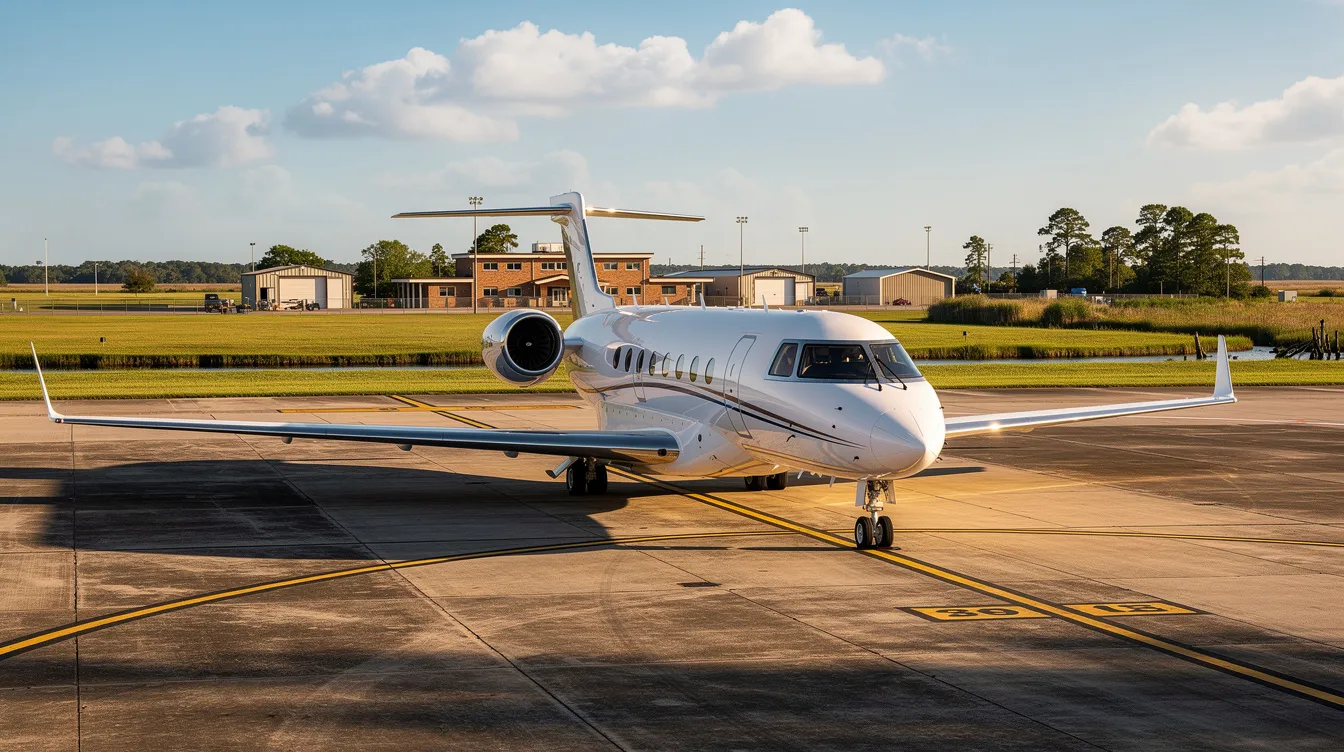
Consider the comparison. A commercial flight from Baton Rouge to Houston requires arriving at the terminal 90 minutes early, clearing TSA, waiting at the gate, boarding a regional jet, and often connecting through a hub. Door-to-door, that is four to five hours for a trip that covers roughly 270 miles. A private departure from BTR Jet Center collapses that into under two hours, including the drive to the field. For executives making same-day roundtrips to refinery sites or corporate headquarters, the math is not subtle. BTR Jet Center emphasizes a private-aviation alternative to commercial travel, and the time savings alone justify the shift.
The typical clientele at the jet center reflects this reality. Regional corporate travelers serving the petrochemical corridor between Baton Rouge and Lake Charles. State government officials who need flexible schedules between the capital and Washington. Families heading to LSU football games who want to fly in Saturday morning and leave that night. Leisure travelers bound for ski weekends or New Orleans dining. Each of these travelers benefits from the FBO's world-class service and quick fuel stops, with full-service fueling available in both Jet A and 100LL. BTR Jet Center offers Jet A fuel at competitive prices, including posted rates of $7.49 per gallon, and the facility's quick-turn services and ground handling ensure aircraft are fueled, serviced, and ready without delay.
In February 2026, BTR Jet Center became part of the Velocity FBO Network, supported by Tallvine Partners. This acquisition integrated the facility into an expanding network of premium FBOs, highlighting ongoing investments in both infrastructure and service excellence. The acquisition brought the facility into a growing platform of premium FBOs, signaling continued investment in infrastructure and service quality. Velocity KBTR now delivers personalized care for seamless arrivals, maintaining the service-first FBO experience that the facility was conceived to provide.
BlackJet's role in this ecosystem is distinct but complementary. While the jet center operates as the local ground operation, BlackJet provides the aircraft, the Jet Card access, and the technology platform that connects members with certified private flights using Baton Rouge as origin, destination, or tech stop. For travelers comparing different programs and providers, understanding the overall jet card cost and membership pricing clarifies how BlackJet fits within the broader private aviation landscape. The result is an end-to-end experience where the member's only job is to show up.
Facilities, Comfort, World-Class Service, and Pilot Amenities
Passenger Amenities
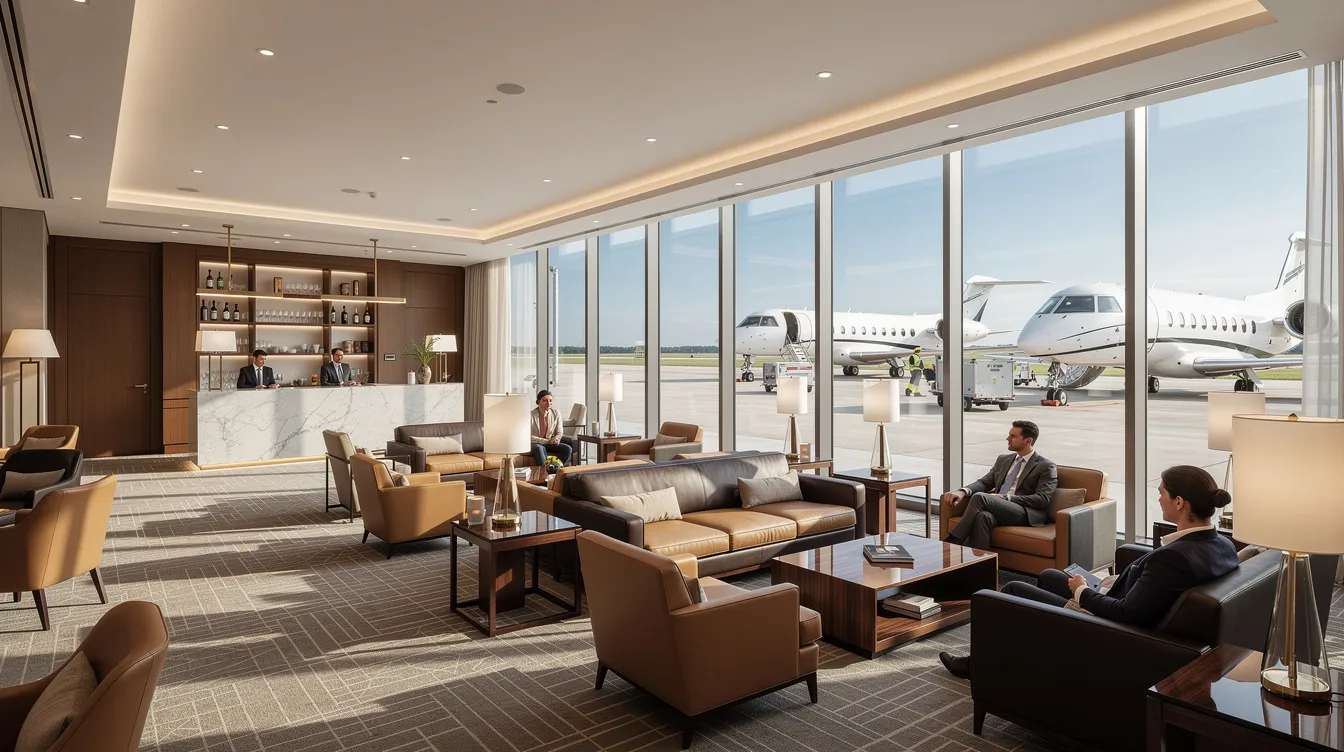
The BTR Jet Center terminal is a 6,600-square-foot facility built with both passengers and pilots in mind. Step inside, and the modern facilities are immediately apparent: leather seating in quiet lounge areas, complimentary Wi-Fi, and workstations where executives can handle last-minute calls or review documents before boarding. The facility features a conference room suitable for business meetings, making it possible to hold a board review or client debrief without ever leaving the FBO. For passengers who want to watch their aircraft being prepared, the terminal includes an observation deck, a detail that adds a signature touch to the departure experience.
The comfort extends well beyond the passenger side. BTR Jet Center features modern, luxurious comfort for both passengers and pilots, and the pilot-focused amenities reflect a genuine understanding of what crews need between legs.
Pilot Facilities
The facility offers pilot facilities, including a dedicated lounge and snooze rooms, where crews can rest during longer ground stops. The pilot's lounge includes a full kitchen and hot coffee, along with free soft drinks and an open bar for off-duty crew and passengers alike. BTR Jet Center features a comfortable pilot's lounge stocked with complimentary snacks, and throughout the terminal, passengers can also enjoy free snacks and soft drinks. Showers, restrooms, and a flight-planning room with weather resources round out the crew amenities, and crew cars are available for errands or meals off-site. These are not afterthoughts; they are overnight crew support features that directly affect safety by ensuring pilots are rested and comfortable before their next mission.
For BlackJet flight crews operating into BTR Jet Center, these amenities serve a specific purpose within the company's safety-first culture. BlackJet's operational standards require adherence to FAA duty-time limits and rest rules. When a crew flies a multi-leg day that includes a stop in Baton Rouge, access to a proper rest area with a comfortable snooze room, hot food, and a quiet environment means the difference between a fatigued crew and one that is confident and sharp for the next departure. The FBO also coordinates ground transportation, including on-site rental car access and car-to-aircraft transfer, so passengers enjoy a seamless arrival experience from vehicle door to cabin door.
Hangar and Infrastructure
Behind the terminal sits a 90,000-square-foot hangar, providing covered storage for aircraft and supporting maintenance and ground operations. This scale of infrastructure is uncommon at regional FBOs and underscores the investment that has gone into making BTR Jet Center a facility that can serve heavy operational demands without compromise.
Strategic Role of Baton Rouge for BlackJet Members
Baton Rouge is more than a dot on the map. It is the heart of Louisiana's government, a hub for the Gulf Coast energy sector, and a growing center for healthcare and higher education. For BlackJet members, reliable private aviation access through the jet center is not a convenience; it is a competitive advantage. The ability to fly on your own schedule, avoid commercial hub connections, and return home the same day transforms how executives and families engage with travel.
Consider this scenario. An energy executive based in Baton Rouge holds a 25-hour BlackJet Jet Card. She has a board meeting in Houston at 10 a.m. and a site inspection in Midland by 3 p.m. She arrives at BTR Jet Center at 7:15 a.m., walks directly to a light jet on the ramp, and is wheels-up by 7:30. She lands in Houston before 9, completes her meeting, and is airborne again by noon. By 1:30, she is on the ground in Midland. After two hours at the wellsite, she departs and is home in Baton Rouge for dinner. Commercially, that schedule is a two-day trip with hotel stays. For travelers evaluating whether the time savings and flexibility justify the premium, a broader look at whether chartering a private jet is worth it reinforces why, with BlackJet, it is a single business day.
Or take the leisure side. A family wants a long weekend in Aspen. They drive to BTR Jet Center on a Thursday afternoon, step aboard a super-midsize jet with room for luggage and ski gear, and land in Aspen roughly three hours later. No connections through Dallas or Denver. No checked-bag anxiety. No schedule that depends on an airline's whims. BlackJet members can choose BTR Jet Center as their preferred FBO when booking, ensuring that the car pulls up directly at the aircraft and luggage is handled from arrival to departure. The experience is a perfect trip built around the traveler, not the airline.
These examples are not hypothetical. They reflect the daily operation of professionals and families who have logged enough commercial flights to know the void between what airlines promise and what they deliver. For readers newer to private aviation, understanding the fundamentals of what charter flights mean and how they work helps frame how BTR Jet Center fits into the wider ecosystem. BTR Jet Center fills that void with efficiency and personalized care.
BlackJet Jet Cards and Private Aviation from BTR Jet Center
BlackJet's Jet Card programs operate on a straightforward principle: members purchase prepaid flight hours in 25-hour or 50-hour increments across multiple aircraft categories. Those hours can be used on flights that originate or end at BTR Jet Center, or any other qualifying airport in the network. Members do not own or manage aircraft. They own access, and that access is backed by a platform designed to make every step from booking to landing effortless; understanding jet card cost per hour and key pricing factors helps frequent flyers align that access with their travel budgets.
From Baton Rouge, the aircraft categories available through BlackJet cover a practical range. Light jets handle regional hops around the Gulf South, connecting BTR to Houston, Dallas, Atlanta, and Nashville in under two hours. Midsize jets extend the reach to the Eastern Seaboard, Colorado ski towns, and the upper Midwest. Super-midsize and large-cabin aircraft serve coast-to-coast routes and international sectors, with the cabin space and range to fly nonstop from Baton Rouge to nearly any destination in North America. For travelers balancing comfort with budget, exploring the most affordable private aircraft options can clarify which cabin class best matches their mission profile. The runway infrastructure at KBTR supports all of these categories comfortably.
The booking flow is designed for people who do not have time to negotiate quotes. Members open BlackJet's digital platform, select BTR as origin or destination, choose their cabin class and timing, and receive real-time pricing and confirmation within minutes. The app handles the logistics. BlackJet's 24/7 flight support teams then coordinate slot times, fuel, catering, and ground handling with the FBO, making early-morning and late-night departures from BTR Jet Center possible without the member lifting a finger.
This is where Jet Cards differ meaningfully from on-demand BTR air charter. Charter operators require per-trip quoting, availability searches, and often last-minute pricing adjustments during peak periods. For those still comparing models, a clear view of what it costs to charter a small plane helps highlight where subscription-style access and on-demand charter each make the most sense. BlackJet Jet Cards offer predictable hourly rates, guaranteed availability even during high-demand windows like LSU home games or Mardi Gras weekend in New Orleans, and a service commensurate with the investment. There is no toggle between vendors, no negotiation, and no uncertainty. The experience BTR Jet Center delivers on the ground is matched by the consistency BlackJet provides in the air: curated catering, standardized cabin quality, and seamless door-to-door logistics from Baton Rouge homes and offices to the aircraft steps.

Safety, Certification, and Operational Standards at BTR
Every BlackJet flight operating through BTR Jet Center is arranged with operators that meet stringent, auditable safety standards. These are exclusively FAA Part 135-certified operators, and BlackJet layers additional requirements on top of federal minimums. The company's proprietary BlackJet Certified program accepts fewer than 30 percent of U.S. charter operators into its approved roster, drawing on over 300 million data points related to aircraft maintenance, crew qualifications, insurance, and operational history. For travelers comparing risks between commercial and private aviation, a deeper look at how safe private jets are in practice underscores why these additional layers matter. Third-party safety audits from organizations like ARGUS and Wyvern are standard prerequisites.
Before any flight is dispatched into or out of Baton Rouge, BlackJet's operations team reviews crew experience, aircraft maintenance records, and duty-time limits. This is not a passive checkbox exercise. For example, if a multi-leg day results in a crew approaching duty limits, BlackJet's scheduling system flags the metric and adjusts, either swapping crews or repositioning aircraft to ensure legal and safe operation. If weather at KBTR degrades, the team initiates contingency planning, including alternate airport identification and fuel reserves, leveraging the airport's CAT II ILS approach on Runway 22R and professional ATC services that operate from 5 a.m. until midnight daily.
The safety infrastructure is subject to oversight by BlackJet's Certification Board, which includes former FAA and NTSB leaders. For members, the note is simple: every flight meets well-deserved expectations for safety, regardless of whether it departs from a major hub or from the east ramp at Ryan Field.
Technology, Real-Time Support, and Member Experience
BlackJet's technology platform extends the jet center experience into the digital space. Members using BTR Jet Center can track their flight in real time, receive push notifications for departure time changes, view digital itineraries, and modify ground transportation directly within the app. If a meeting runs long and a departure needs to shift by an hour, a single message to BlackJet's concierge team triggers a cascade of adjustments at the FBO, from fuel scheduling to catering timing.
That 24/7 concierge layer is more than a call center. It is a real-time support operation that coordinates with BTR Jet Center on catering preferences, conference room reservations for pre-flight meetings, and last-minute passenger additions. Members who zoom between cities on tight schedules rely on this integration to eliminate friction. For travelers who occasionally only need a single seat rather than a whole aircraft, understanding how to buy a seat on a private jet offers additional flexibility alongside full-aircraft Jet Card access. Whether the home jump left on a Monday morning is Baton Rouge to Atlanta or Baton Rouge to New York, the experience is consistent: same digital tools, same service standards, and the same carbon-neutral flight guarantee that applies to every BlackJet departure.
For travelers who value knowing every detail is handled before they arrive, this is where the private aviation experience at the jet center meets the technology backbone that makes it repeatable and reliable.
Sustainability, Local Ecosystem, and How to Fly via BTR Jet Center with BlackJet
Sustainability Initiatives
Every BlackJet flight, including those departing or arriving at BTR Jet Center in Baton Rouge, is carbon neutral. This is not an upgrade or an add-on. BlackJet calculates emissions for each leg based on distance, aircraft type, and fuel burn, then invests in verified environmental projects or sustainable aviation fuel (SAF) programs to balance the carbon footprint. For flyers exploring more accessible entry points into private aviation, reviewing the cheapest private jet options and cost-saving strategies can help align sustainability goals with budget expectations. The cost is absorbed by BlackJet, not passed to members.
Economic Impact
Supporting private aviation at Baton Rouge also contributes to the local economy in tangible ways. The FBO operation employs line service staff, customer service professionals, and maintenance technicians. Flight training programs on the field benefit from the airport's infrastructure. Increased business and leisure access drives revenue for hotels, restaurants, and ground transportation providers across the region. For business users in particular, understanding how to maximize jet card tax deductions can further enhance the economic efficiency of trips flown via BTR. BlackJet's sustainability approach helps mitigate the environmental impact of these increased operations, creating a model where economic growth and environmental responsibility are not in conflict.
How to Book with BlackJet
For prospective members ready to learn how this works in practice, the process is straightforward:
Inquire online at BlackJet or speak with a membership advisor.
Select a Jet Card tier: 25-hour or 50-hour jet card, comparing cost and value, in your preferred aircraft category.
Complete onboarding, including passenger profiles, travel preferences, and preferred FBOs.
Book your first flight from BTR, selecting Baton Rouge as your origin and your destination.
Arrive at BTR Jet Center 20–30 minutes before departure, step aboard, and fly.
There is no void between signing up and flying. The platform is built to move at the speed of your schedule, and the team at BTR Jet Center is prepared to meet you with professional ground service from the moment your car arrives at the ramp. For high-frequency travelers, evaluating the best jet cards for frequent flyers can help match expected usage with the right BlackJet structure.
The combination tells a clear story. World-class service at the jet center, BlackJet's uncompromising safety and sustainability standards, and the strategic advantages of private aviation for Baton Rouge-based travelers create an experience that commercial airlines cannot replicate. For those structuring a longer-term relationship with private aviation, a deeper dive into jet card pricing structures and benefits can clarify how to integrate BTR-based flying into an annual travel plan. Whether your mission is closing a deal in Houston, spending a weekend in the mountains, or simply reclaiming hours that would otherwise be lost to layovers and security lines, BTR Jet Center and BlackJet provide the infrastructure and the access to make it happen.
Explore BlackJet Jet Card access from Baton Rouge, including 100-hour jet card options and costs, and discover how BTR Jet Center can become your personal gateway to the Gulf South and beyond.


 Sign up with google
 Sign up with Apple